
The Macedonian Man
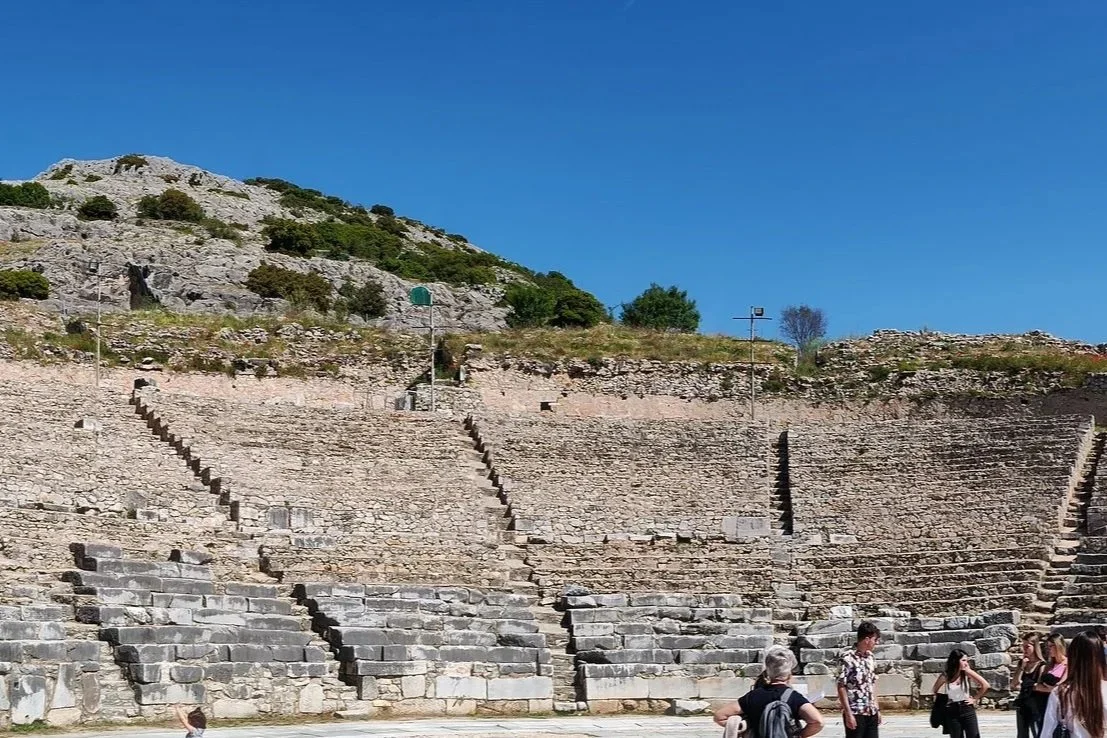
Even if you’ve never sojourned to Philippi before, to enter its ancient ruins may still feel like walking familiar ground. Being here will help you recall from the Scriptures the affection Paul expressed for this first-century church on the northern coast of the Aegean Sea:
I thank my God in all my remembrance of you, always in every prayer of mine for you all making my prayer with joy, because of your partnership in the gospel from the first day until now. And I am sure of this, that he who began a good work in you will bring it to completion at the day of Jesus Christ. (Philippians 1:3–6)
Stopped by the Spirit
Although Philippi was one of the first cities where Paul preached in Greece, God had begun a good work in the region long before Paul and Silas took the gospel to Philippi. The two apostles had been traveling throughout Asia, encouraging the believers in churches already established. As they bolstered believers in Galatia and Phrygia, they made plans to visit the northern provinces of Asia, “but the Spirit of Jesus did not allow them. So, passing by Mysia, they went down to Troas” (Acts 16:7–8). In other words, the Asian portion of Paul’s second missionary journey was coming to a screeching halt.
At Troas, “a vision appeared to Paul in the night: a man of Macedonia was standing there, urging him and saying, ‘Come over to Macedonia and help us’” (Acts 16:9). The apostles sailed the Aegean Sea, landed at Neapolis, and traveled to Philippi. The gospel had landed in Europe.
Philippi’s Rich History
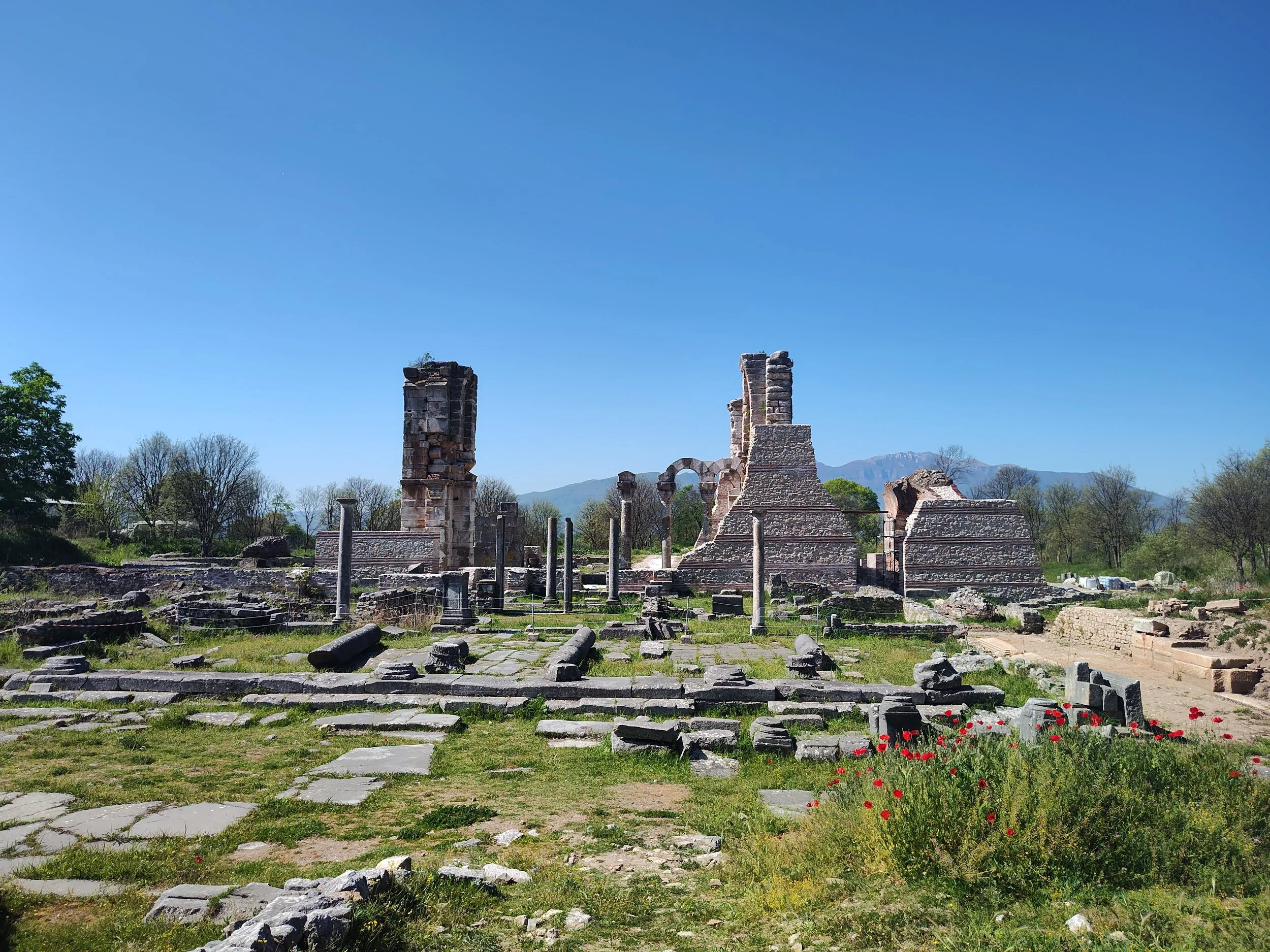
It’s fair to believe that Paul and Silas would search for the Macedonian man. But he wasn’t there to greet them as they got off the boat. Instead, they were greeted by a thriving city — a city with a rich history.
The area’s large deposits of gold and silver drew Philip II — Alexander the Great’s father — to the region. Originally named Crenides, he conquered the city in 356 BCE and named it after himself.1 Philip II fortified the city, and he spared no expense, using marble blocks.2 He also constructed a theatre, “one of the largest built in Greece.”3
Philippi had continued to grow in size and influence and was considered one of the prominent centers of Macedonia about 100 years before Paul and Silas arrived.4
During the first century, the apostles were greeted by a thriving Philippi, one that warranted this commentary: “So, setting sail from Troas, we made a direct voyage to Samothrace, and the following day to Neapolis, and from there to Philippi, which is a leading city of the district of Macedonia and a Roman colony” (Acts 16:11–12).
The Search for the “Macedonian Man”
Scripture doesn’t document a search for the Macedonian man, but it does reveal that Philippi had fertile soil for Christian belief. Instead of meeting the Macedonian man, Paul and Silas met someone else:
“Scripture doesn’t document a search for the Macedonian man, but it does reveal that Philippi had fertile soil for Christian belief.”
And on the Sabbath day we went outside the gate to the riverside, where we supposed there was a place of prayer, and we sat down and spoke to the women who had come together. One who heard us was a woman named Lydia, from the city of Thyatira, a seller of purple goods, who was a worshiper of God. The Lord opened her heart to pay attention to what was said by Paul. And . . . she was baptized, and her household as well. (Acts 16:13–15)
If Lydia had been male, the apostles may have believed they had found the Macedonian man. Surely, this businesswoman, this first convert to Christianity on European soil, would fulfill the plea “Come over to Macedonia and help us.” But the vision was of a Macedonian man.
On another occasion, the apostles encountered “a slave girl who had a spirit of divination and brought her owners much gain by fortune-telling” (Acts 16:16). Paul exorcised the spirit with the words, “I command you in the name of Jesus Christ to come out of her” (Acts 16:18). Surely, this possessed slave girl would fulfill the plea “Come over to Macedonia and help us.” But she too was not a man.
Because of the exorcism, Paul and Silas were dragged away, beaten, shackled, and jailed. At midnight, the imprisoned apostles “were praying and singing hymns to God, and the prisoners were listening to them” (Acts 16:25). An earthquake rattled the prison. The doors were unlocked. The shackles fell off. And the jailer awoke, knowing that if he had lost the prisoners, he would also lose his life, so “he drew his sword and was about to kill himself, supposing that the prisoners had escaped” (Acts 16:27). Paul assured him that all the prisoners were present and accounted for. “And the jailer called for lights and rushed in, and trembling with fear he fell down before Paul and Silas . . . and said, ‘Sirs, what must I do to be saved?’” (Acts 16:29–30).
Had the apostles found the middle-of-the-night vision in this middle-of-the-night salvation? Was the Roman jailer the Macedonian man who pleaded, “Come over to Macedonia and help us’”?
Your “Macedonian Man”
As you sojourn to Philippi, you may join the search for the elusive Macedonian. And you may wonder, Was the Macedonian man not one man, but many? Did he represent all people in Macedonia, both men and women? Were those who needed help a people group that included jailers, prisoners, slave girls, businesswomen, and every other person across Europe who could cry out, “Come over . . . and help us”?
Making your sojourn to Philippi provides lessons from the past that equip you for the future — for people God puts in your path who could join the Macedonian man and say, “Come over . . . and help us.”
Want to learn the past so you can help lead the future?
Sojourn with us to discover the places, people, and principles that have shaped Western civilization!
Email us at info@leadwithsojourn.com.