
Stonehenge, Old Sarum, and Salisbury Cathedral (Wiltshire County, England)
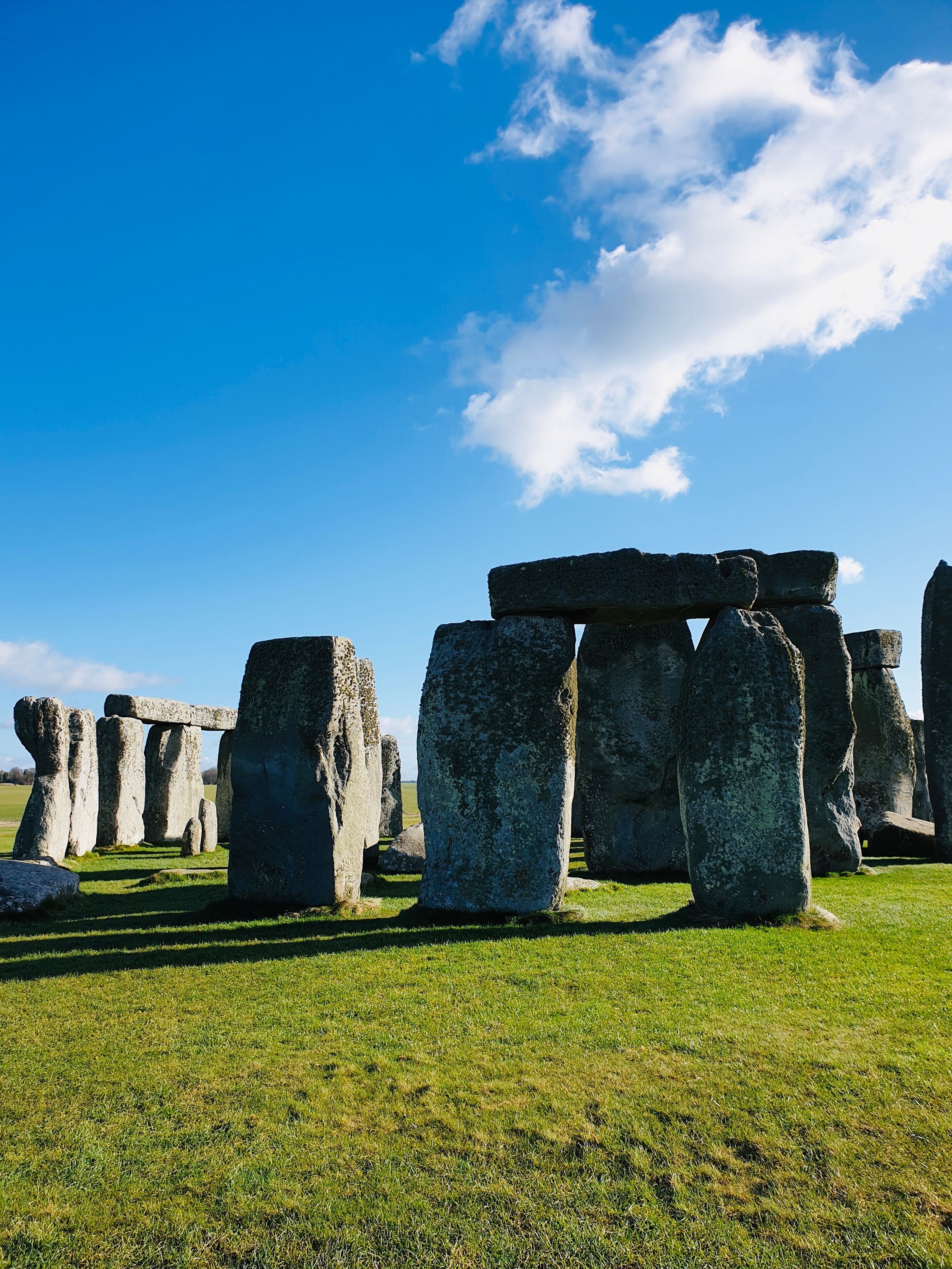
Wiltshire County in South West England has a life lesson to teach: Formidable foundations of the past produce strong leaders of the future.
In one day, sojourners can explore Stonehenge, a mysterious field of stones reaching 4,500 years into prehistory; Old Sarum, an Iron Age fortress dating back to 400 BC; and Salisbury Cathedral, an 800-year-old house of worship with England’s tallest spire. Each has a story, inviting the curious to contemplate strong foundations that have stood the test of time.
Stonehenge: On Silent Watch
The mystery of Stonehenge is magnified by the picturesque backdrop of the English countryside. In nearby fields, sheep graze as a matter of routine. They do not contemplate. They do not wonder. They simply graze — while oversized rocks stand by on silent watch.
Where flocks of sheep wander to graze, humans flock to wonder. We gaze. We contemplate. Where did these stones come from? What do they mean?
British archaeologist Professor Richard Atkinson asked these questions as director of Stonehenge for the Ministry of Works (from 1950 to 1964). Through BBC television, he “produced a theory on the creation of Stonehenge.”1
When asked about the purpose of Stonehenge, Atkinson replied, “There is one short, simple, and perfectly correct answer. We do not know and we shall probably never know.”2
What we do know is that Stonehenge is a “masterpiece of engineering, erected in the late Neolithic period,” somewhere around 2500 BC.3 “Weighing over 20 tonnes and standing up to seven metres tall, the largest stones at Stonehenge” were built to stand the test of time.4
Old Sarum: Iron Age Centurian
“Ancient rock formations, a formidable fort, and a magnificent cathedral draw sojourners to ask, “How did they come to be? What is their purpose? What is their why?””
A stone’s throw away lies Old Sarum — a formidable Iron Age hill fort that dates back to the fifth century BC. The unique groundwork trenches around the castle employed ingenious technology for that time. Moats warned. Sheer drop-offs challenged. Armed soldiers stood watch. This fortress proclaimed the intent to protect its people.
It also set loyalty as a foundational stone in English culture. In AD 1086, William the Conqueror summoned the barons of England to Old Sarum to swear fealty among barons and subtenants.5 If “one of the powerful men of the realm were to rebel against the Crown, the primary loyalty of his subtenants would be to the king rather than to their immediate master.”6
In time, Old Sarum would outgrow its usefulness. The foundational stone of loyalty, however, would go on to serve as a touchstone for the English people.
Salisbury Cathedral: Portable Sanctuary
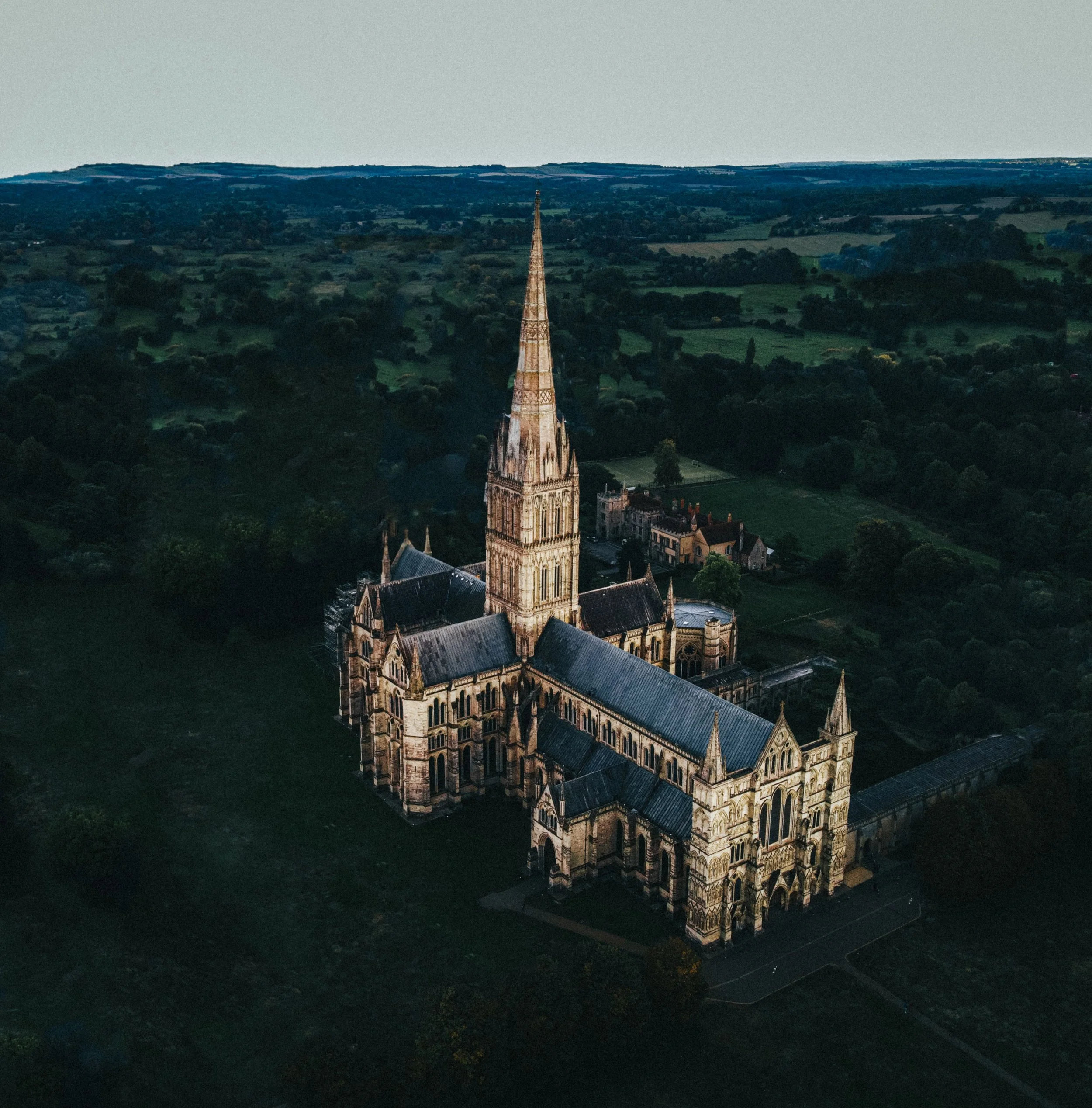
Downhill from Old Sarum, Salisbury Cathedral teaches another lesson: Structures with strong foundations can move — literally and figuratively. Originally, Salisbury Cathedral shared the same property as Old Sarum fortress (circa AD 1091). By AD 1217, a poor water supply and strained relations between the clergy and the military led to a radical solution: to move the cathedral to a new site.7 On April 28, 1220, “foundation stones were laid,” and the cathedral was relocated two miles away.8
Today, more than 800 years later, the new Salisbury Cathedral has bragging rights. It houses one of four original copies of the Magna Carta, and its spire is the tallest in England. The cathedral is the perfect example of early English Gothic architecture.9
Salisbury Cathedral is more than an architectural icon. The move furthered its ecclesiastical mission. During World War I, its bell tolled daily at noon “to remind people … to pray for the safety of the soldiers and sailors and to ask God for peace.”10 During World War II, “the Cathedral’s medieval Chapter House was used as a shelter for people … whose houses had been destroyed by bombs” in nearby towns.11 Salisbury Cathedral is built on a foundation of service.
Foundations: Visible and Invisible
The architecture of Wiltshire County, England, invites us to gaze at structures that have stood the test of time. Ancient rock formations, a formidable fort, and a magnificent cathedral draw sojourners to ask, “How did they come to be? What is their purpose? What is their why?”
As we contemplate formidable foundations of the past that have stood the test of time, we may learn that such foundations produce strong and steady leaders of the future. As we contemplate what we see in architecture, we understand this life lesson: Lasting foundations are built on truth, mortared in place by those who have come before us — our parents, grandparents, pastors, teachers, and mentors.
These providential lessons of our past form the firm foundation on which we stand, steadied and strengthened to boldly lead the future.
Want to learn the past so you can help lead the future?
Sojourn with us to discover the places, people, and principles that have shaped Western civilization!
Email us at info@leadwithsojourn.com.
1 “Stonehenge,” Bradshaw Foundation, accessed July 2, 2026, https://www.bradshawfoundation.com/stonehenge/index.php.
2 Bradshaw Foundation, “Stonehenge.”
3 “Where Did the Stonehenge Stones Come From? A New Study of Large Stones Suggest How Monument Was Built,” University of Brighton, accessed July 2, 2026, https://www.brighton.ac.uk/research/research-news/feature/stonehenge-researching-sarsen-stones.aspx.
4 University of Brighton, “Where Did the Stonehenge Stones Come From?”
5 “William the Conqueror and the Oath of Sarum,” English Heritage, accessed July 2, 2026, https://www.english-heritage.org.uk/visit/places/old-sarum/history/oath-of-sarum/.
6 “William the Conqueror and the Oath of Sarum.”
7 “The Cathedral That Moved,” Salisbury Cathedral, accessed June 29, 2026, https://www.salisburycathedral.org.uk/discover/history/the-cathedral-that-moved/.
8 Salisbury Cathedral, “The Cathedral That Moved.”
9 Léonie Chao-Fong, “10 of the Most Beautiful Gothic Buildings in Britain,” History Hit, January 20, 2020, https://www.historyhit.com/beautiful-gothic-buildings-in-britain/.
10 “The Cathedral Today,” Salisbury Cathedral, accessed June 29, 2026, https://www.salisburycathedral.org.uk/discover/history/the-cathedral-today/.
11 Salisbury Cathedral, “The Cathedral Today.”