
William Shakespeare: Genius or Regular Ol’ Guy?
In the opening lines of The Elements of Eloquence, Mark Forsyth writes, “Shakespeare was not a genius. He was, without the distant shadow of a doubt, the most wonderful writer who ever breathed. But not a genius. No angels handed him his lines, no fairies proofread for him. Instead, he learnt techniques, he learnt tricks, and he learnt them well.”1
Good to know. William Shakespeare was a regular ol’ guy who put his pants on one leg at a time.
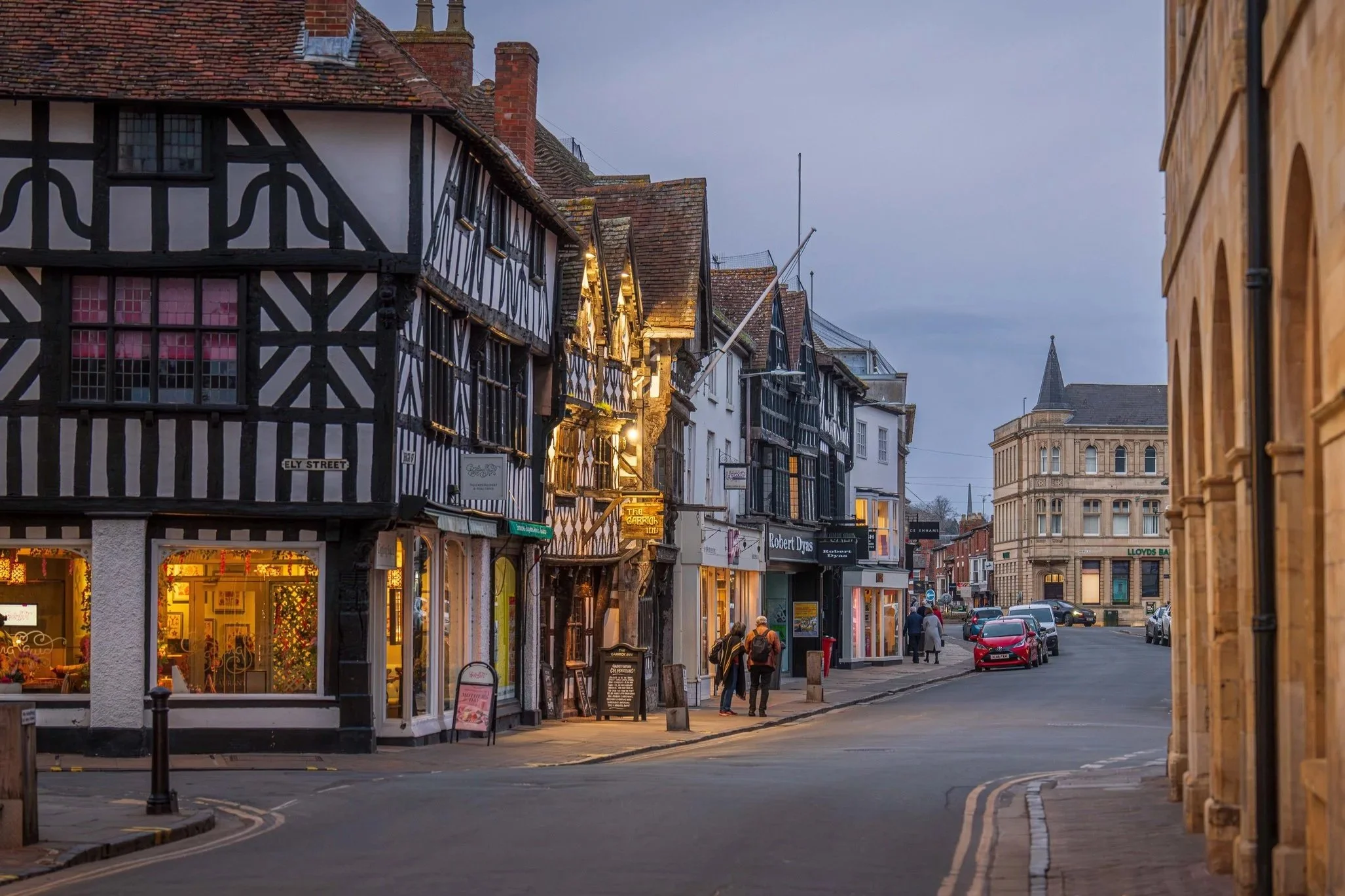
When you sojourn to Stratford-upon-Avon, you may get the feeling that the bard was superhuman. This may be due to the bucolic setting, the Warwickshire countryside, the peacefulness of being on the banks of the river, or joining throngs of fans in one of the most popular tourist destinations in Britain.2 William Shakespeare’s legacy draws a crowd.
Four Measures of Greatness
To call the greatest writer “who ever breathed” a genius may hint of hyperbole, but can we at least agree that Shakespeare was great?
Literary critics measure literary greatness against four areas: quantity, quality, universality, and endurability.
1. Quantity
In quantity, Shakespeare outpaced the competition by composing more than three dozen plays and 154 sonnets. In layman’s terms, a bound edition of Shakespeare’s complete works is thicker than a phone book from the 1970s. Shakespeare was a prolific writer. But burning through gallons of ink and reams of parchment is only one measure of literary greatness.
2. Quality
Is Shakespeare worth reading? Consider this: Shakespeare’s plays land within the major categories of literature: comedy (Much Ado About Nothing, A Midsummer Night’s Dream, and The Taming of the Shrew), tragedy (Macbeth, Hamlet, and King Lear), and history (any play that has Henry or Richard in the title). His dramatic skills were diverse.
He also wrote 154 sonnets. Andrew Hearle summed up Shakespeare’s poetic prowess this way:
These sonnets investigate love, loss, deception, time, [and] youth and are certainly not simple love poems. Like much of Shakespeare’s work, a cursory glance may lead one to believe the words are simply light, easy 14 lines of verses, but in fact they are full of pain and longing and remain some of Shakespeare’s most personal writings.3
The bard from Stratford-upon-Avon is a literary Hall of Famer based on the quality of his work, spread over multiple genres.
3. Universality
The next measure of greatness considers an author’s readership. Who reads Shakespeare? If an author can appeal to men and women, to the young and the old, as well as to readers from ages past and those of the present age — in Europe, America, and, well, everywhere — then we say the author has a universal appeal. Somehow, William Shakespeare delivers time and again.
Practitioners from Bell Shakespeare observed, “Shakespeare remains arguably unrivalled in his ability to understand and explore humanity on stage. By holding up a ‘mirror to nature’ (Hamlet, Act 3, Scene 2), he shone a light on our glories and flaws and explored what it means to be human.”4
Shakespeare appealed to a cross section in a way that makes us want to revisit the “not a genius” claim.
4. Endurability
The final mark of literary greatness is endurability. Are people still reading Shakespeare? In all fairness, as long as high school is a legal requirement, students will be exposed to William Shakespeare, but endurability must find its footing in more than required reading. In other words, do the lessons last beyond test day? Let’s find out with a short quiz.
How many of the following lines can you complete?
“To be, or not to be — that is ________________” (Hamlet, Act 3, Scene 1).5
“O Romeo, Romeo, wherefore art _____________?” (Romeo and Juliet, Act 2, Scene 2).6
“Beware the Ides of __________” (Julius Caesar, Act 1, Scene 2).7
“What’s in a name? _______________________ by any other word would smell as sweet” (Romeo and Juliet, Act 2, Scene 2).8
“All that glisters is ___________” (The Merchant of Venice, Act 2, Scene 7).9
“Friends, Romans, countrymen, lend me ____________” (Julius Caesar, Act 3, Scene 2).10
For most of us, the playwright likely still lives in our long-term memory.
Shakespeare did more than create memorable lines. The man was a word factory, inventing somewhere between 1,770 to 3,000 brand-new words — the ordinary kind that regular folk like you and me know: lonely, assassination, swagger, bedroom, eyeball, gloomy, fashionable, puppy dog, kissing, gossip, and a couple thousand more.11
A Regular Ol’ Guy
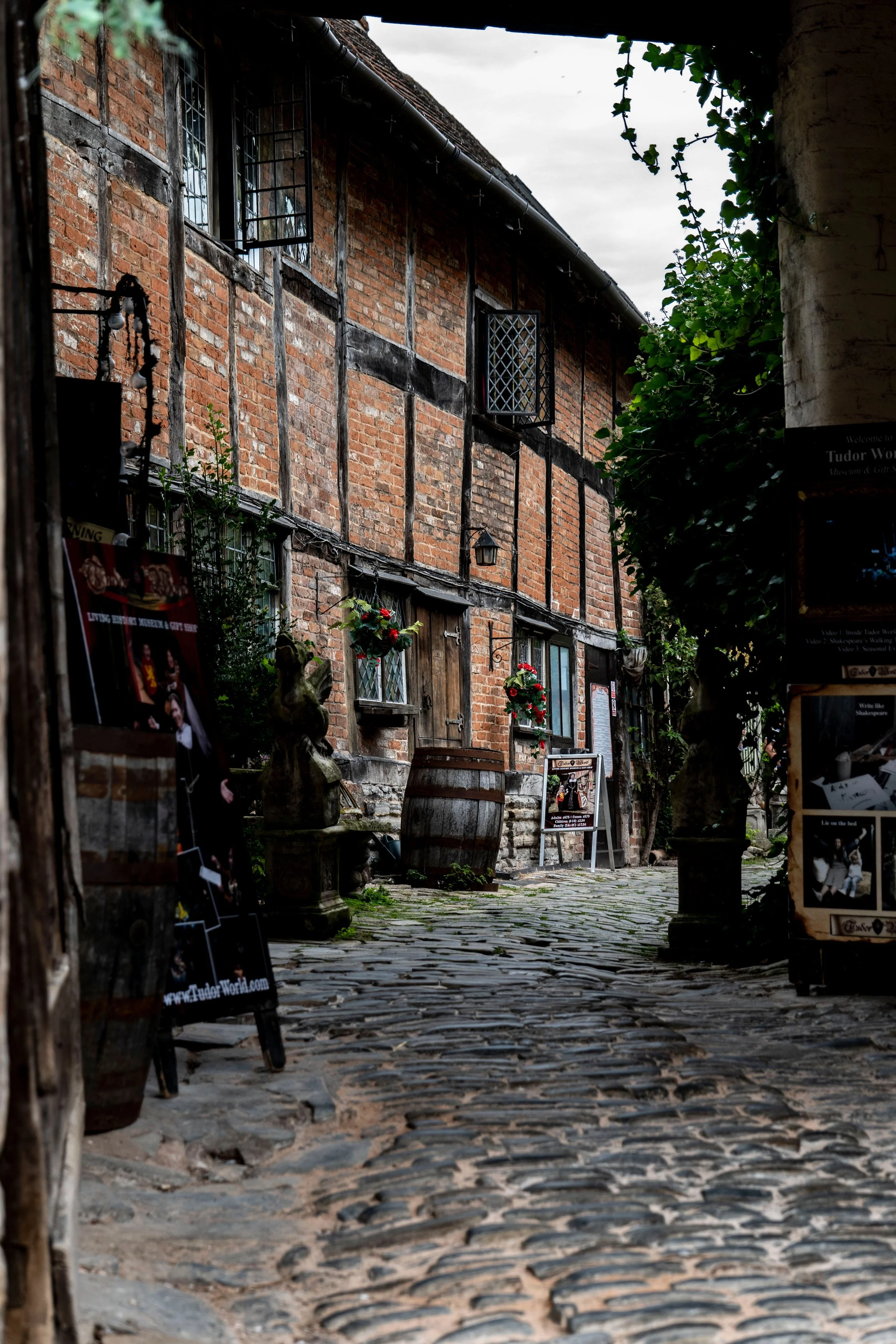
It’s fair to say that William Shakespeare deserves countless visitors to his hometown, but to call Shakespeare a genius implies that he didn’t put his pants on one leg at a time like the rest of us. Truth is, he was a regular ol’ guy with a story to tell and a song that came out in sonnet form. So he got out of bed every day, ate breakfast, and went off to school. While there, he rose through the ranks and rigors. But just like us, Shakespeare’s path was ordinary: He studied, memorized, crammed, drafted, and revised while “learn[ing] techniques, . . . learn[ing] tricks, and . . . learn[ing] them well.”12
And that is a lesson from the past that sojourners should apply today so as to leave their own mark on the world.
Want to learn the past so you can help lead the future?
Sojourn with us to discover the places, people, and principles that have shaped Western civilization!
Email us at info@leadwithsojourn.com.
1 Mark Forsyth, The Elements of Eloquence (Berkley Books, 2014), 1.
2 Ben Johnson, “Stratford-upon-Avon,” Historic UK, The History Magazine, accessed July 12, 2026, https://www.historic-uk.com/HistoryMagazine/DestinationsUK/StratforduponAvon/.
3 Andrew Hearle, “Best Shakespeare Sonnets,” StageMilk, updated May 17, 2026, https://www.stagemilk.com/best-shakespeare-sonnets/.
4 “Humans as Represented by Shakespeare,” Bell Shakespeare, accessed April 14, 2026, https://www.bellshakespeare.com.au/humans-as-represented-by-shakespeare.
5 “Hamlet,” The Folger Shakespeare, accessed July 12, 2026, https://www.folger.edu/explore/shakespeares-works/hamlet/read/.
6 “Romeo and Juliet,” The Folger Shakespeare, accessed July 12, 2026, https://www.folger.edu/explore/shakespeares-works/romeo-and-juliet/read/.
7 “Julius Caesar,” The Folger Shakespeare, accessed July 12, 2026, https://www.folger.edu/explore/shakespeares-works/julius-caesar/read/.
8 The Folger Shakespeare, “Romeo and Juliet.”
9 “The Merchant of Venice,” The Folger Shakespeare, accessed July 12, 2026, https://www.folger.edu/explore/shakespeares-works/the-merchant-of-venice/read/.
10 The Folger Shakespeare, “Julius Caesar.”
11 “Shakespeare’s Words,” Shakespeare Birthplace Trust, accessed April 15, 2026, https://www.shakespeare.org.uk/explore-shakespeare/shakespedia/shakespeares-words/.; “How Many Words Did Shakespeare Invent?,” Hire a Writer (blog), September 30, 2024, https://www.hireawriter.us/creative/how-many-words-did-shakespeare-invent.
12 Mark Forsyth, The Elements of Eloquence.