
Lady Liberty – A Story of E pluribus unum
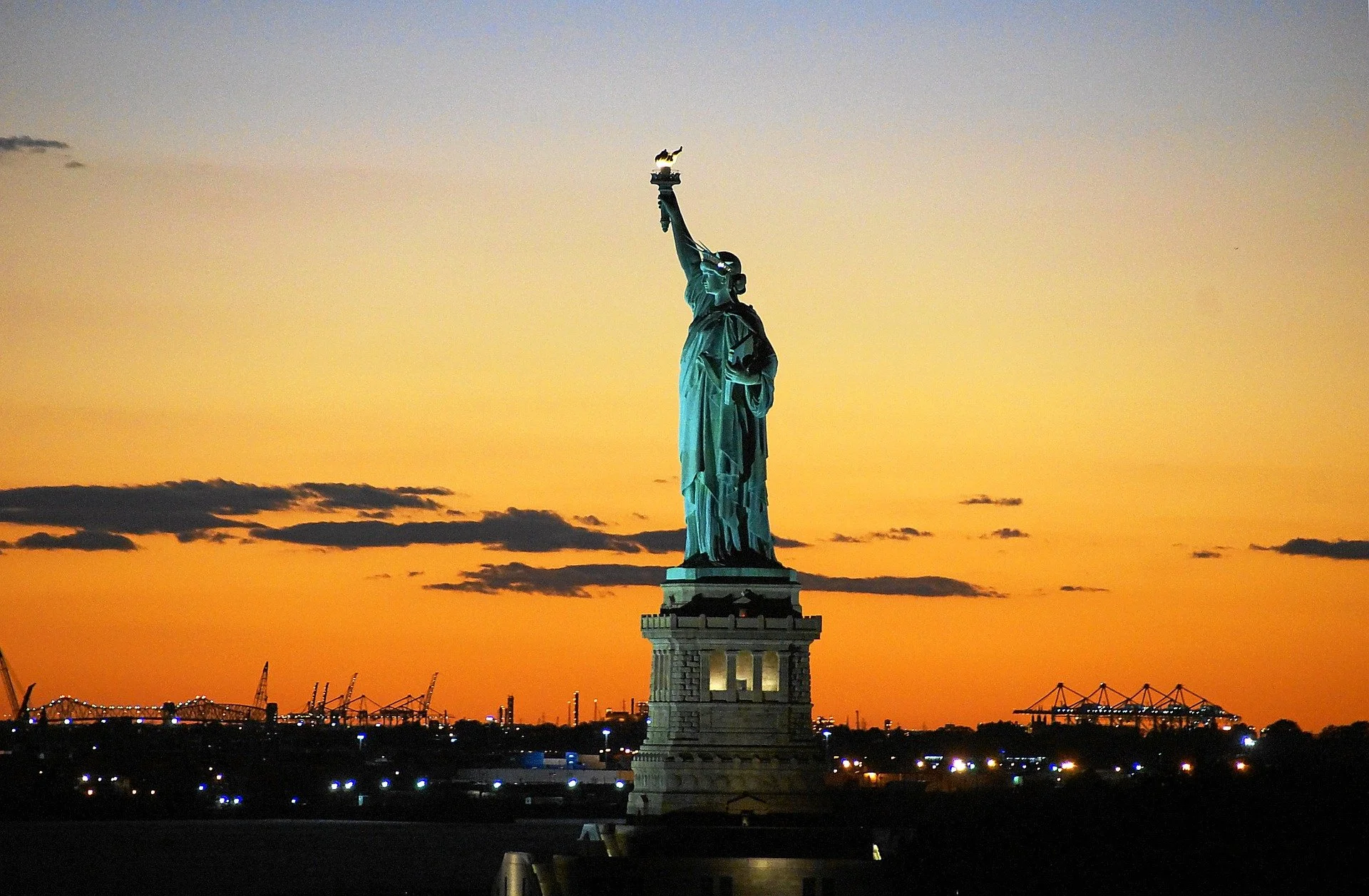
The Statue of Liberty stands alone in New York Harbor. She is a “mighty woman . . . and her name is Mother of Exiles . . . from her beacon-hand glows world-wide welcome; her mild eyes command the air-bridged harbor.”1 She calls, “Give me your tired, your poor, your huddled masses yearning to breathe free.”2
Lady Liberty “is an icon, a national treasure, and one of the most recognizable figures in the world.”3 Though she stands alone on Liberty Island, her story represents E pluribus unum: out of many, one. True, the statue began as the inspiration of one Frenchman — but the story of how she has come to raise her beacon of hope for 140 years tells a story that spans national borders.
Admiration Becomes Inspiration
In 1865, Frenchman Édouard de Laboulaye proposed that the French give an extravagant gift to the American people.4 Laboulaye “was a prominent political thinker in his time,”5 a student of the U.S. Constitution, an abolitionist and supporter of Abraham Lincoln. Laboulaye “believed whole-heartedly in the ‘common laws of free peoples.’”6 He dedicated much of his career urging “the return of democracy to France.”7
“In her right hand, she lifts the torch of enlightenment, and her right foot is lifted to imply that freedom is the way of the future.”
Sculptor Frédéric-Auguste Bartholdi, a friend of Laboulaye, was in attendance on the day of the proclamation. He went to work and “began conceptualizing the colossal structure that would soon be known as Liberty Enlightening the World.”8 He wove symbols in his design. In her left hand, Lady Liberty cradles a tablet engraved with July 4, 1776 — a nod to the Declaration of Independence. “Broken shackles . . . lie at her feet, symbolizing the abolition of slavery.”9 In her right hand, she lifts the torch of enlightenment, and her right foot is lifted to imply that freedom is the way of the future.10
The extravagant gift was taking shape through Bartholdi’s design: a 151’ 1” copper statue of a woman with a torch raised to the heavens, however, would require an internal structure.11 The sculptor needed an engineer to address structural issues associated with his colossal copper sculpture. Bartholdi engaged Alexandre Gustave Eiffel to design a “massive iron pylon and secondary skeletal framework that allows the statue’s copper skin to move independently yet stand upright.”12 Eiffel was yet to design the tower in Paris that made his name known around the world.13
Funding the Foundation
While France had come together to create the statue, America was working on the granite base. Richard Morris Hunt, America’s leading architect, had made a name for himself by designing an extension of the Capitol in Washington, DC.14 He was selected to design the foundation on which Lady Liberty would stand. Hunt designed a 154’ granite pedestal15 and placed it within the walls of Fort Wood, a military installation on Liberty island.16
To finance the construction project, organizers sponsored a variety of events: prizefight boxing matches, theatrical productions, as well as art and literary exhibitions and auctions.17 A fundraising event in 1883 featured Jewish American poet Emma Lazarus, who had written a sonnet that would become synonymous with the Statue of Liberty. She entitled it “The New Colossus.”
Not like the brazen giant of Greek fame,
With conquering limbs astride from land to land;
Here at our sea-washed, sunset gates shall stand
A mighty woman with a torch, whose flame
Is the imprisoned lightning, and her name
Mother of Exiles. From her beacon-hand
Glows world-wide welcome; her mild eyes command
The air-bridged harbor that twin cities frame.
“Keep, ancient lands, your storied pomp!” cries she
With silent lips. “Give me your tired, your poor,
Your huddled masses yearning to breathe free,
The wretched refuse of your teeming shore.
Send these, the homeless, tempest-tost to me,
I lift my lamp beside the golden door!”18
Two years later, newspaper owner, Joseph Pulitzer, helped the fundraising cause when he announced that “he would print the names of every contributor . . . in his newspapers.”19 His offer paid off and “Pulitzer managed to raise $102,000 (. . . $2.3 million today).”20 Eighty percent of the donations were less than $1.21
Crossing the Atlantic
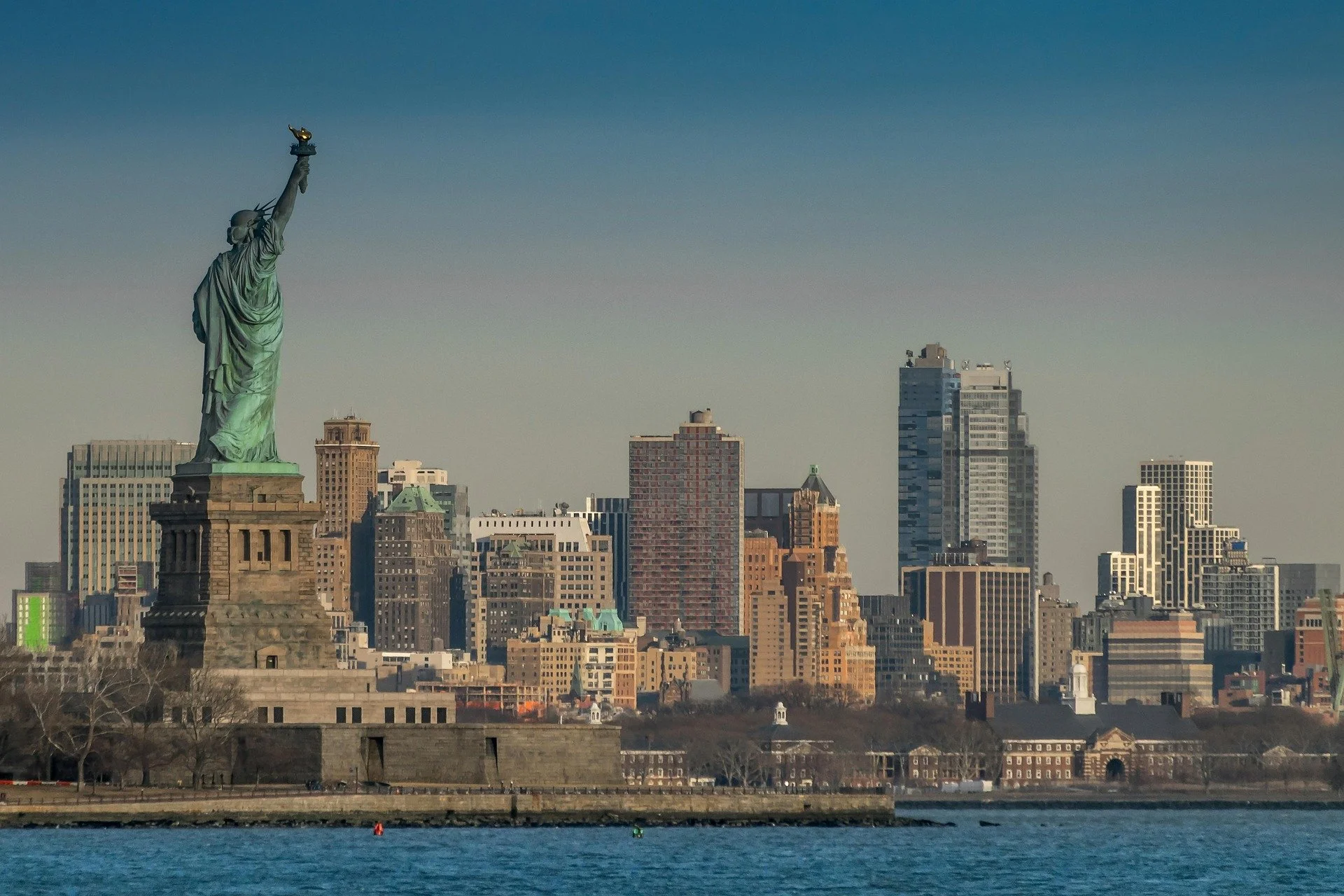
Nearly twenty years after Laboulaye proposed an extravagant gift to America, “350 individual pieces . . . packed in 214 crates” made their way from France to the New York Harbor aboard a ship named Isère.22 A year later, “on October 28, 1886, President Grover Cleveland oversaw the dedication of the Statue of Liberty in front of thousands of spectators.”23
E pluribus unum
The Statue of Liberty stands alone in New York Harbor, but she came to be due to the efforts of many. She has come to symbolize E pluribus unum—out of many one. The dream of an extravagant gift started as the idea of one Frenchman who believed in the rights of free people. It inspired a sculptor named Bartholdi, an engineering genius named Eiffel, an architect named Hunt, a newspaper man named Pulitzer, a poet named Emma Lazarus. It also included over 100,000 American donors, countless sailors, masons, metal and construction workers, crane operators — all who came together to erect this enduring symbol of the American dream.
By taking lessons from how Lady Liberty came to stand alone in New York Harbor, we are more equipped to lead in the future — not merely as many, but also as one.
Want to learn the past so you can help lead the future?
Sojourn with us to discover the places, people, and principles that have shaped Western civilization!
Email us at info@leadwithsojourn.com.
1 “The New Colossus,” The Statue of Liberty, National Park Service, accessed April 28, 2026, https://www.nps.gov/stli/learn/historyculture/colossus.htm.
2 “The New Colossus.”
3 “The Statue of Liberty,” Statue of Liberty and Ellis Island Foundation, accessed May 5, 2026, https://www.statueofliberty.org/statue-of-liberty/overview-history/.
4 “The Statue of Liberty.” Statue of Liberty . . ..
5 “Édouard de Laboulaye,” National Park Service, updated May 19, 2019, https://www.nps.gov/stli/learn/historyculture/edouard-de-laboulaye.htm.
6 “Édouard de Laboulaye.”
7 “Édouard de Laboulaye.”
8 “The Statue of Liberty.” Statue of Liberty . . ..
9 “Statue of Liberty,” National Park Service, updated April 17, 2026, https://www.nps.gov/stli/learn/statue-of-liberty-facts.htm.
10 “Statue of Liberty,” National Park Service . . ..
11 “The Statue of Liberty.” Statue of Liberty . . ..
12 “The Statue of Liberty.” Statue of Liberty . . ..
13 “The Statue of Liberty.” Statue of Liberty . . ..
14 Laura Itzkowitz, 5 Surviving Structures by Richard Morris Hunt in New York and Newport, Rhode Island, Untapped Cities, updated February, 25, 2022, https://www.untappedcities.com/surviving-structures-richard-morris-hunt/.
15 “The Statue of Liberty.” Statue of Liberty . . ..
16 Laura Itzkowitz.
17 “The Statue of Liberty.” Statue of Liberty . . ..
18 “The New Colossus.”
19 Laura Itzkowitz.
20 Laura Itzkowitz.
21 Laura Itzkowitz.
22 “Statue of Liberty,” National Park Service . . ..
23 “Statue of Liberty,” National Park Service . . ..