
Washington Monument — The Monument that Almost Wasn’t
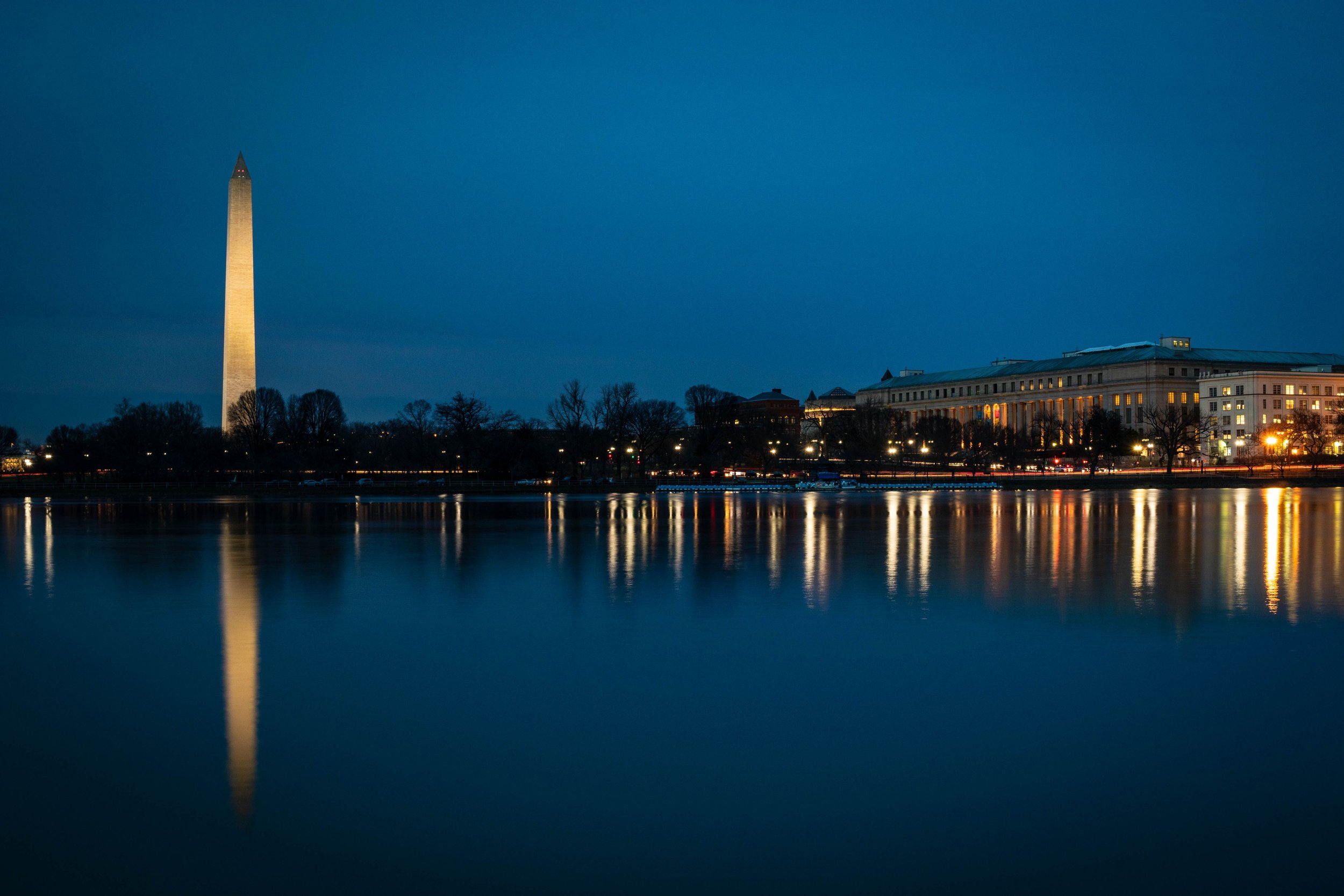
No sojourn to Washington, DC, is complete without paying tribute to the Washington Monument. When it opened in 1885, this Egyptian obelisk was the tallest building in the world. Standing at more than 555 feet and ⅝ an inch high, it still towers above all others in our nation’s capital today.1 How appropriate — for it pays tribute to a giant on whose shoulders our nation stands.
Memorializing a Giant
The formal process to memorialize America’s first president began in 1833, three decades after George Washington’s death. Everyday citizens were urged to donate up to $1 to fund the $200,000 project.2 After 13 years of fundraising, “a 24,500-pound marble cornerstone” was “laid with great fanfare.” Mementos encased within the stone included coins, newspapers, and copies of the Declaration of Independence and the Constitution.3
Though generous, the $200,000 fund would prove insufficient with only 152 feet of the 555-foot monument complete.4 Visitors today can see where the project stalled. The first third of the monument is a lighter color of marble than the rest. What had begun as a monument to commemorate President Washington devolved into a partially finished embarrassment, and it stayed that way for almost a quarter of a century.
Delayed by Shortage . . . and War
Insufficient funds stopped the project in 1854, and five years of Civil War further prevented its progress. With the nation at war with itself, building a tower to commemorate the past was not on anyone’s mind. Finally, in 1876, Congress appropriated $2 million to finish the project, and at 2:17 p.m. on December 6, 1884, “the capstone and aluminum point [were] set into place.”5 The monument stood as a fitting tribute to America’s general and first president.
From vision to completion, progress that produces monuments and memorials tends to move at a glacial pace. Take a photograph of such progress at any point along the way, and the start-and-stop nature may produce an image as embarrassing as an unfinished obelisk in the middle of the national mall. A more accurate picture often takes a lifetime to complete.
The Man Who Almost Wasn’t
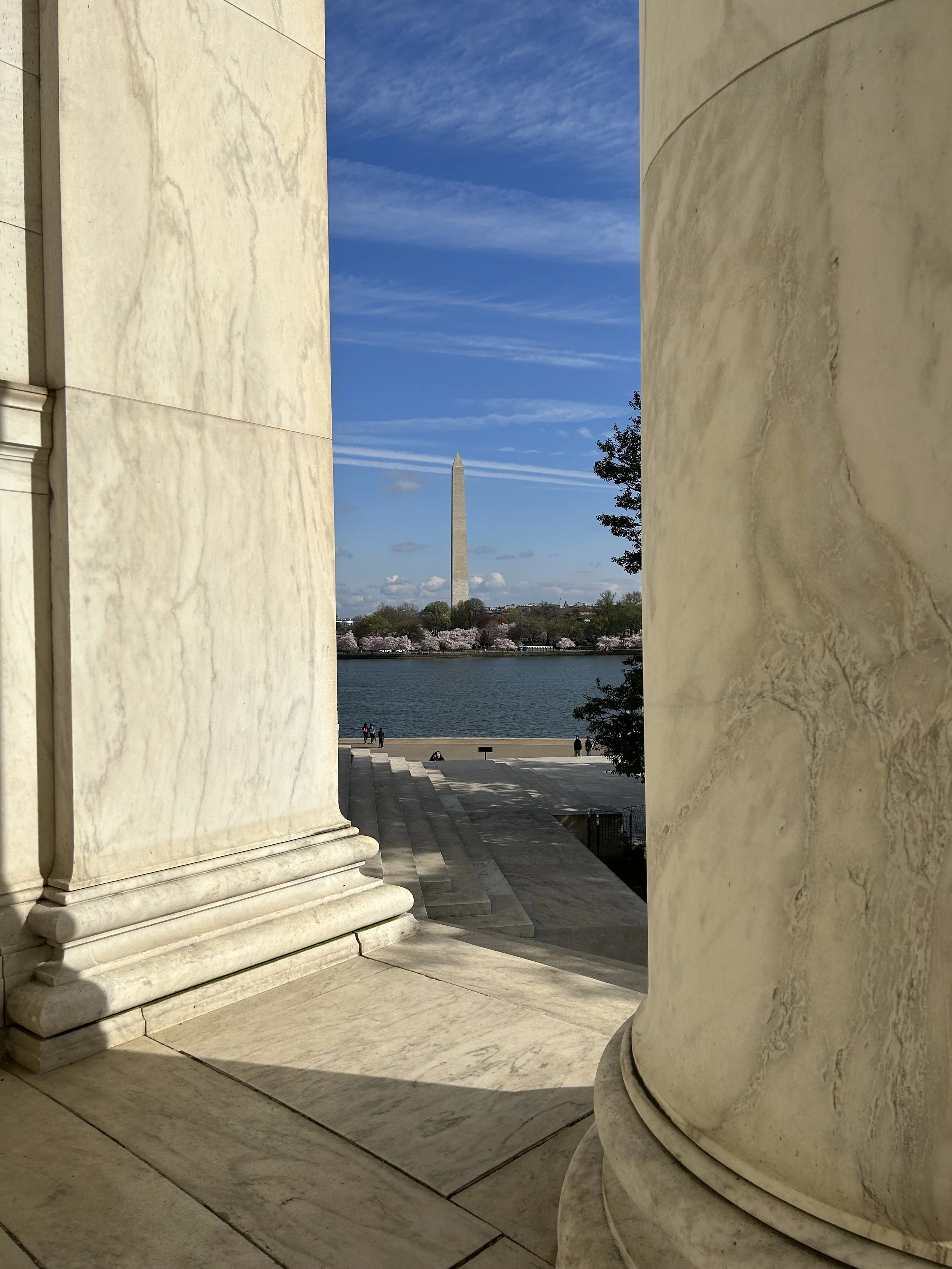
What’s true of the process of building a monument is also true of building one’s legacy. The George Washington we know took an entire lifetime to become worthy of our admiration. Were we to snap a photo along his path to greatness, we’d be as likely to capture an inglorious moment as a glorious one. By nature, George Washington was too quick to speak and too quick to become angry. He had a biting tongue and a hot temper. Only after committing himself to self-discipline did he subjugate these faults to the virtue of self-control.6
Even as the general whose leadership eventually won over England, Washington “lost more battles than he won.”7 Adrienne Harrison, former assistant professor at the US Military Academy, said, “Washington was a great strategic leader who was very good at seeing the big picture and playing the long game, . . . but tactically, he was terrible.”8
Had inspection of Washington’s legacy focused on his hot temper or his weakness for tactical strategy, we may have remembered a far-less heroic George Washington — if we remembered him at all. We gain a more accurate perspective altogether when we judge his virtue now that his life is complete.
You may conclude that a life worth memorializing requires time for success to pass through the filters of stops and starts, of stumbles that lead to steps forward, and of distractions that provide direction.
Building Your Legacy
Let us not build unfinished towers but instead number our days with prudence, finish the race in order to win the prize, and trust God to complete the legacy he has set before us.
The truth of Washington’s legacy is reflected in each of our own. If all we did was remember how we stalled or got distracted or outright failed to build what God entrusted to us, few of us would end our lives with a story worth memorializing. Let us not build unfinished towers but instead number our days with prudence,9 finish the race in order to win the prize,10 and trust God to complete the legacy he has set before us.11
The Washington Monument stands taller than all the rest in our capital, teaching us a worthy lesson from the past and helping us to lead in the future.
Want to learn the past so you can help lead the future?
Sojourn with us to discover the places, people, and principles that have shaped Western civilization!
Email us at info@leadwithsojourn.com.
1 “Washington Monument,” National Park Foundation, accessed April 27, 2026, https://www.nationalparks.org/explore/parks/washington-monument.
2 “Washington Monument Construction Timeline,” Washington Monument, National Park Service, last updated September 14, 2022, https://home.nps.gov/wamo/learn/historyculture/monumentconstruction.htm.
3 “Washington Monument Construction Timeline.”
4 “Washington Monument Construction Timeline.”
5 “Washington Monument Construction Timeline.”
6 Harry Schenawolf, “General George Washington’s Explosive Temper Helped Shape the Man Who Forged a New Nation,” Revolutionary War Journal, November 8, 2018, https://revolutionarywarjournal.com/general-george-washingtons-temper-shaped-the-man-who-forged-a-new-nation/.
7 “George Washington’s Strengths and Weaknesses,” Washington Crossing Historical Park, accessed April 22, 2026, https://www.washingtoncrossingpark.org/washingtons-strengths-weaknesses/.
8 “George Washington’s Strengths and Weaknesses.”
9 Psalm 90:12.
10 1 Corinthians 9:24.
11 Philippians 1:6.