
9/11 Memorial & Museum: Visiting the Place Where Americans Died
On the 25th anniversary of 9/11, America watched the coverage of ceremonies that are meant to ensure we never forget. Through television, we gathered with dignitaries and families and friends of the victims.
At Ground Zero — the costliest site of the 9/11 attacks — survivors read the 2,983 names of those who died at the hands of Islamic terrorists on September 11, 2001, and from the Trade Center bombing on February 26, 1983.1 Among those who read were children of the murdered. Some admitted they have no recollection of their loved ones, only photos or home videos.
One young man read his uncle’s name and added, “[You are] the uncle that I never got to play basketball with, the uncle that I never met, and the best brother my mom could have asked for.”2
Another survivor said, “Twenty-five years of an empty chair, an empty plate, and a lifetime of wondering what he would think, what would he say, what kind of father he would have been” voiced the grief of those too young to remember.3
Memorials Plant Memories
People flock to the 9/11 Memorial & Museum as a “place of remembrance and contemplation within the bustle of lower Manhattan.”4 Some gather because they can’t remember. Others gather because they can’t forget.
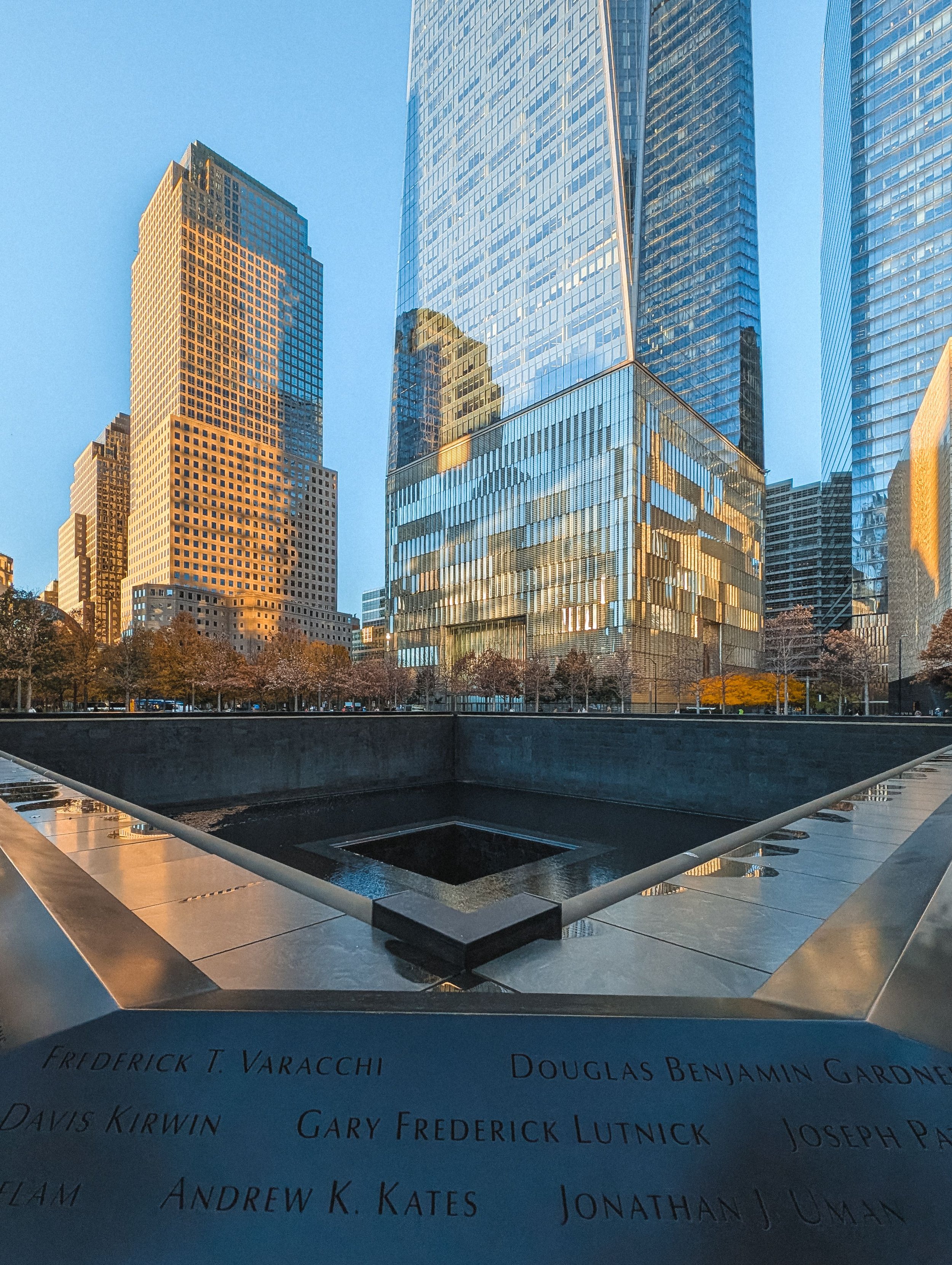
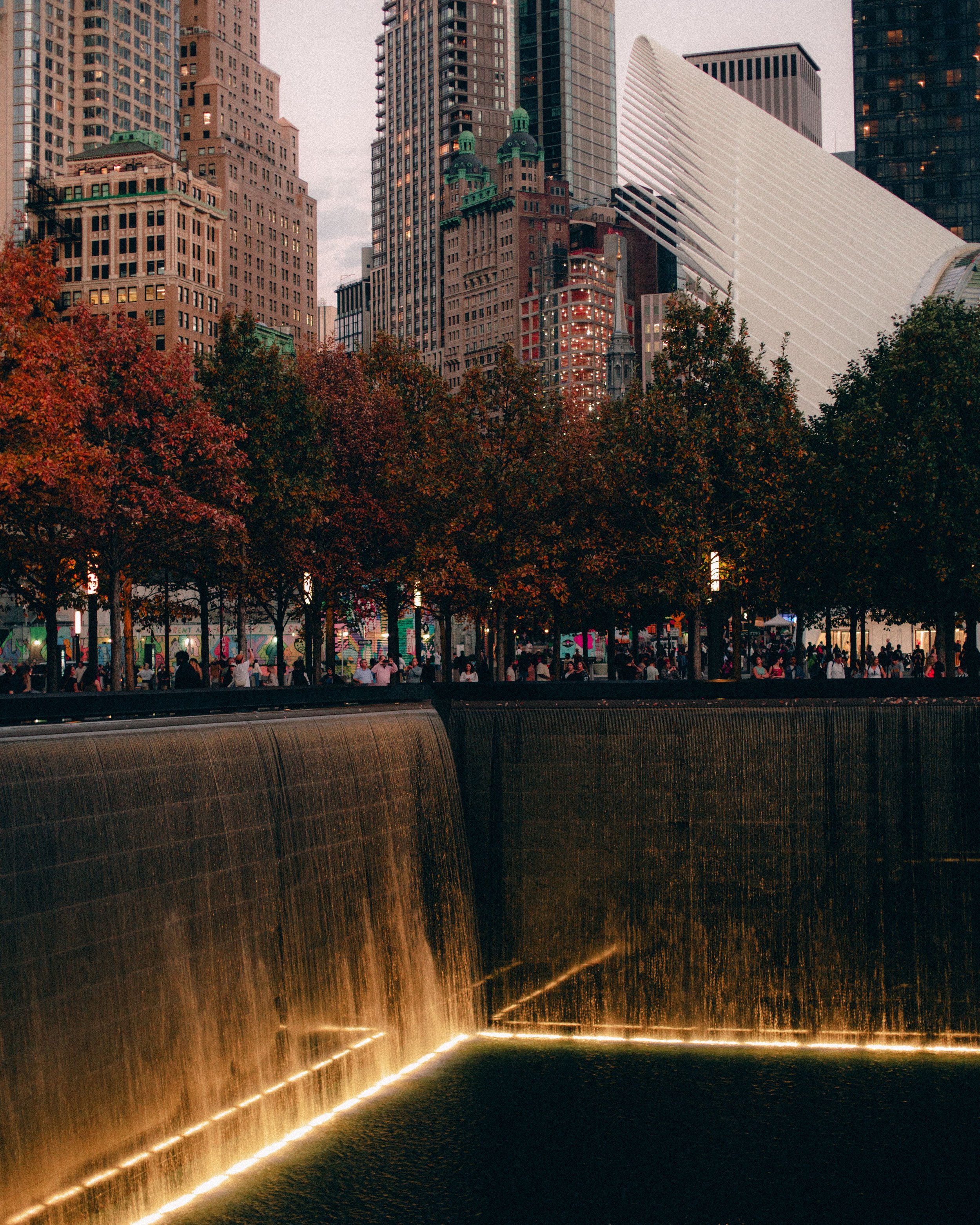
The 9/11 Memorial & Museum at Ground Zero spans “eight acres of the 16-acre World Trade Center complex.”5 Woven around and throughout the Memorial plaza are “400 swamp white oak trees . . . [a] hardy species . . . native to the areas of all three 9/11 crash sites: New York City; Arlington, Virginia; and Somerset County, Pennsylvania.6
““Terrorist attacks can shake the foundations of our biggest buildings, but they cannot touch the foundation of America.”
—President George W. Bush”
When the 9/11 Memorial opened on the 10th anniversary of the attack, the nearly 400 oaks were less mature trees, separated by distance. Now their roots have reached down in time, and their branches have matured into a community of trees resembling a forest.
America has experienced a similar growth. Those of us who cannot forget reach out and touch those who cannot remember.
Under the canopy of the swamp white oaks, sojourners approach the “twin waterfall pools surrounded by bronze parapets that list the names of the victims of the 9/11 attacks and the 1993 World Trade Center bombing.”7 Each waterfall pool is about “an acre in size . . . [and sits] in the footprints of the former North and South Towers.”8
Michael Arad, the Memorial’s designer, crafted the 30-foot waterfalls — “the largest manmade waterfalls in North America” — to represent “absence made visible.”9 The water flows into voids; “the sound of the cascading water makes the pools a place of tranquility and contemplation separate from the bustling noises of the city.”10
Remembrance Takes Root
On the evening of the 9/11 attacks, President George W. Bush addressed our nation. In the midst of our collective pain, the president called us to collective resolve: “A great people has been moved to defend a great nation. Terrorist attacks can shake the foundations of our biggest buildings, but they cannot touch the foundation of America. These acts shattered steel, but they cannot dent the steel of American resolve.”11
A quarter of a century later, visiting the 9/11 Memorial & Museum serves as a sanctuary for our sadness. It also sends down roots of remembrance, allowing us to learn the past so we may lead the future — always in memory of those who gave their lives for our great nation.
Want to learn the past so you can help lead the future?
Sojourn with us to discover the places, people, and principles that have shaped Western civilization!
Email us at info@leadwithsojourn.com.
1 “September 11, 2001 Commemoration,” 9/11 Memorial & Museum, accessed September 24, 2026, https://www.911memorial.org/connect/commemoration/September-11-2001.
2 Alexa Herrera et al., “9/11 Remembrance Ceremony in NYC Marks 25 Years Since Deadly Terror Attack,” CBS News, updated September 11, 2026, https://www.cbsnews.com/newyork/news/911-september-11-remembrance-ceremony-memorial-2026-nyc/.
3 Herrera et al., “9/11 Remembrance Ceremony in NYC.”
4 “About the Memorial,” 9/11 Memorial & Museum, accessed September 23, 2026, https://www.911memorial.org/visit/memorial/about-memorial.
5 “About the Memorial.”
6 “About the Memorial.”
7 “About the Memorial.”
8 “About the Memorial.”
9 “About the Memorial.”
10 “About the Memorial.”
11 George W. Bush, “Statement by the President in His Address to the Nation,” The White House, September 11, 2001, https://georgewbush-whitehouse.archives.gov/news/releases/2001/09/20010911-16.html.