
Oxford: A Door to Narnia
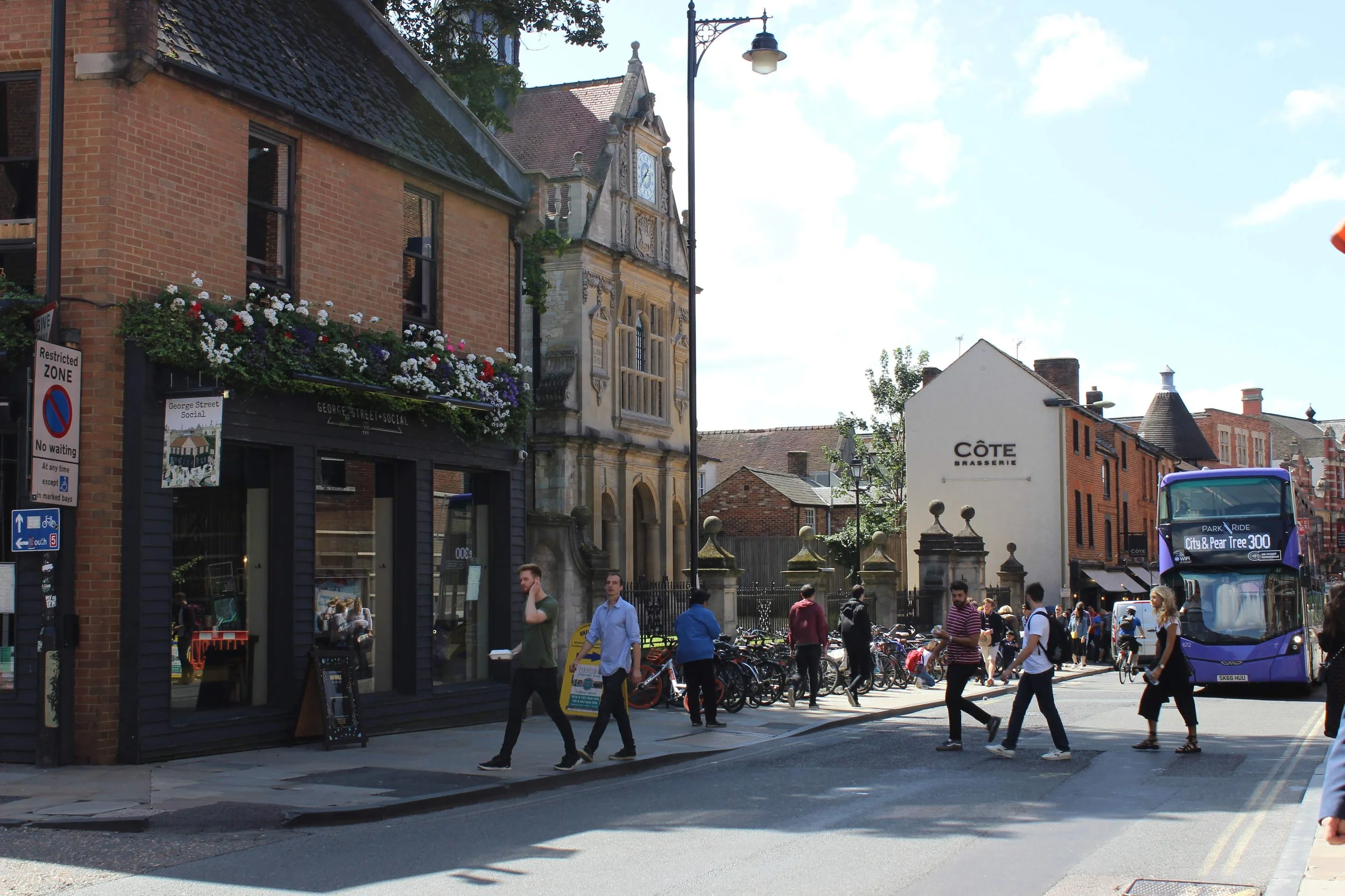
Oxford, England, is a place that breeds a keen sense of community among those who walk its streets. The town teems with professors and students, townsfolk and friends — and plenty of out-of-towners who come with a longing to belong.
Notably, many find the peculiar sense of belonging they seek when they walk into the Oxford of C. S. Lewis’s day.
A Sojourn to Oxford
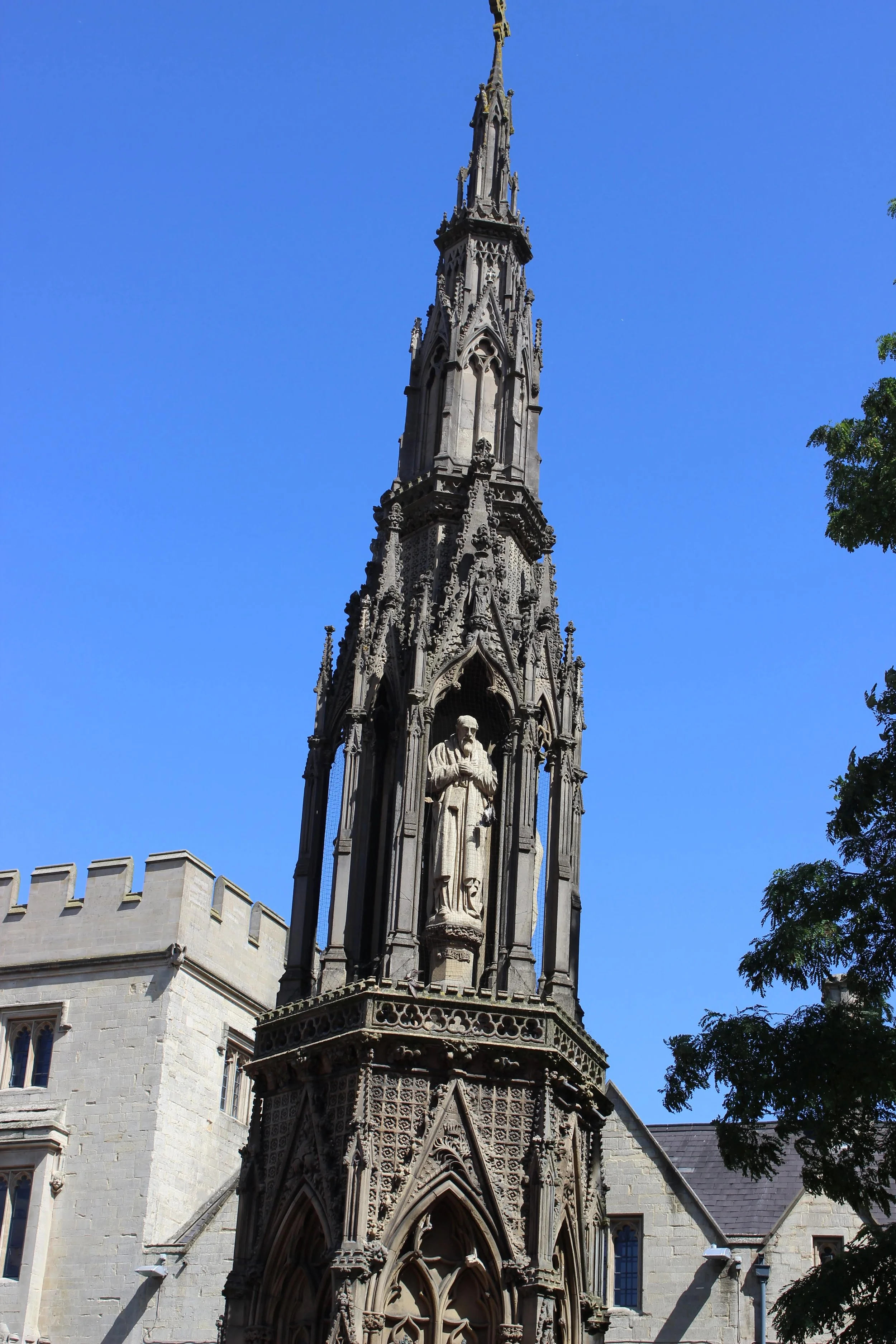
Sojourners enter Oxford with their sightseeing list at the ready: Blackwell’s Bookshop on Broad Street, which C. S. Lewis visited; Magdalen College, where Lewis taught; the Eagle and Child, the favorite haunt of the Inklings (a literary group that included both Lewis and J. R. R. Tolkien), where they would discuss books they were reading or writing; and the Kilns, the house where Lewis lived.
Sojourners can also be found lingering outside a house on Mansfield Road, where a young Lewis spent his first night upon arriving in Oxford. They may imagine Lewis as he journaled about this in December 1916:
I . . . asked to be driven to “some place where I can get rooms for a week, please.” . . . I was soon at tea in comfortable surroundings. The house is still there, the first on the right as you turn into Mansfield Road out of Holywell. I shared the sitting room with another . . . , a man from Cardiff College, which he pronounced to be architecturally superior to anything in Oxford. His learning terrified me, but he was an agreeable man.
Walking through Oxford invites sojourners to look until they see something — though few realize what they’ve been searching for until they finally find it.
Lewis’s Stomping Grounds
To enter Oxford is to enter the world of C. S. Lewis.
To enter Oxford is to enter the world of C. S. Lewis. For nearly 30 years, he taught English literature at Magdalen College. He knew Blackwell’s Bookshop, shared a pint and conversation with “Tollers” (his nickname for J. R. R. Tolkien) at a variety of pubs, and may have visited the graves of his friends buried at St. Cross’s cemetery — Hugo Dyson, Austin Farrer, and Charles Williams. Sojourners can read the gravestones’ granite markers and ponder the influence of the people Lewis called friends.
They can also walk where Lewis walked and discover places like St. Mary’s Passage, a narrow lane just north of High Street. They can even see shadows of Lewis’s Narnia: an antique gas lamp post, like the one Lucy Pevensie saw in The Lion, the Witch and the Wardrobe, and “two gold [fauns] . . . that look like Mr. Tumnus” adorning a wooden door engraved with a lion’s face. Could this be a portal to another world?
No one can prove that the door with the lion’s carving, the pair of fauns, or the lamp post in St. Mary’s Passage sparked Lewis’s inspiration to the world beyond the wardrobe — but the coincidence is too magical to ignore.
A Reluctant Convert
On the other hand, no one can dispute that Lewis also navigated a different kind of passage during his time at Oxford. This journey led this self-described atheist to become the 20th century’s leading Christian apologist.
In describing the story of C. S. “Jack” Lewis’s conversion, Andrea Monda put it this way:
Young Jack’s intelligence was subtle, his curiosity boundless, his acumen amazing, his dialectic power exceptional; yet something came into play that shattered his seemingly firm belief in the inexistence of God, for in life there is always something else, something unforeseen, unnoticed, or surprising.
Lewis invites the curious to imagine his transformation:
You must picture me alone in that room at Magdalen, night after night, feeling . . . the steady, unrelenting approach of Him whom I so earnestly desired not to meet. That which I greatly feared had at last come upon me. In the Trinity Term of 1929 I gave in, and admitted that God was God, and knelt and prayed: perhaps, that night, the most dejected and reluctant convert in all England.
Then, on September 19, 1931, Jack, Tollers, and Hugo Dyson were taking their usual after-dinner stroll in the grounds of Magdalen College and began discussing ancient myths and the Truth “hidden” in these legends.
They talked until after three o’clock in the morning and, a few days later, Lewis wrote to his old friend Arthur Greeves, saying, “I have just passed on from believing in God to definitely believing in Christ, in Christianity. . . . My long night talk with Dyson and Tolkien had a great deal to do with it.”
Lewis’s Past Answers a Longing
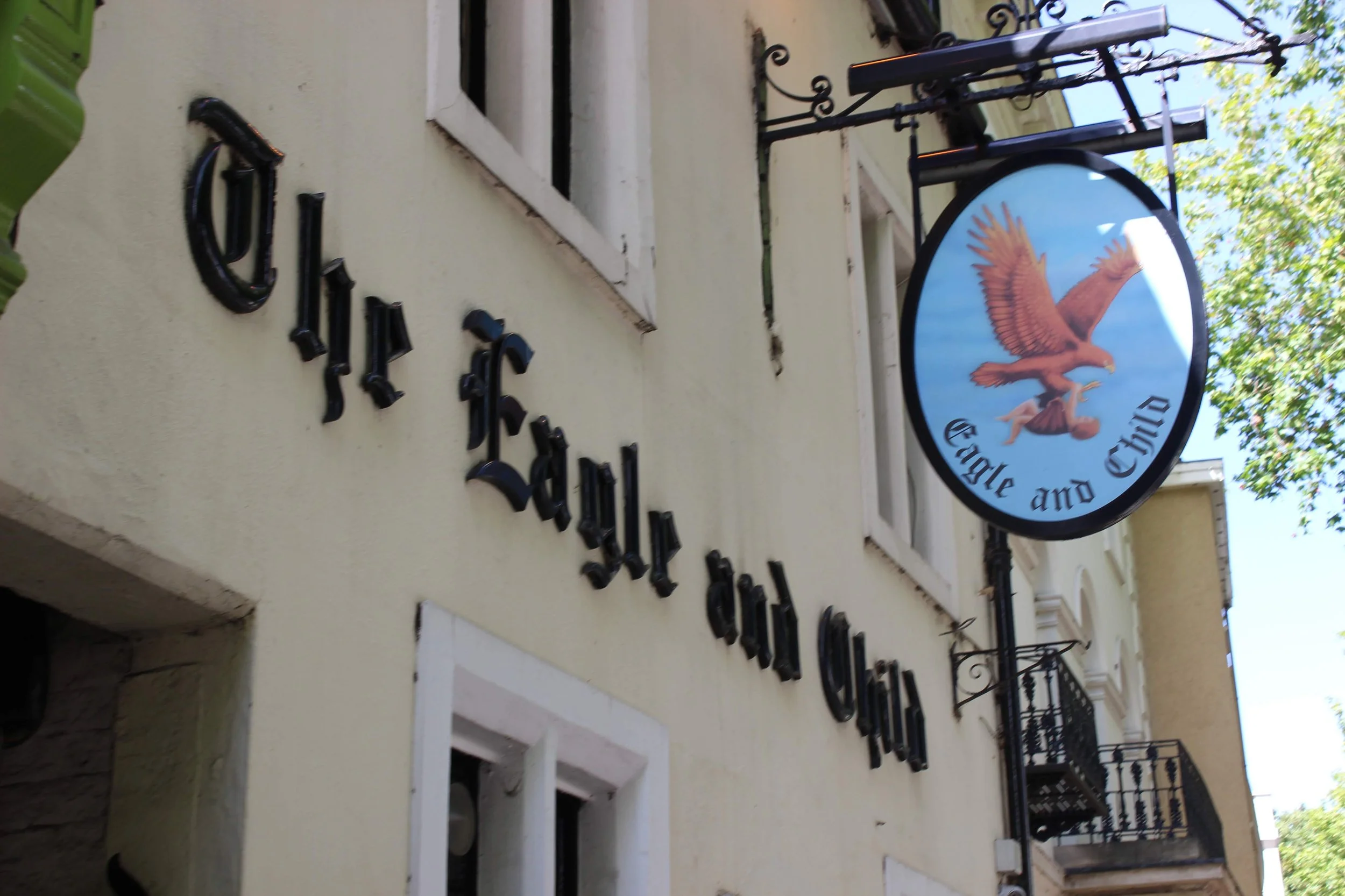
A sojourn to Oxford starts with a defined list of sites — a list propelled by a longing to belong to a community where friendships are forged over time. Where discussions hover around the true, the good, and the beautiful. Where community lasts until lives are etched into granite. Where, with our closest comrades, we talk about the greater things well into the wee hours of the morning.
A stroll through Oxford’s “dreaming spires” and “last enchantments,” as described by Lewis in his journal, beckons us to follow in his footsteps and hear — if only for a day — the echoes of his inspiration and the Spirit who filled him at long last.
And, as we let Lewis’s voice speak to us from the page of the past, we learn to lead as he did, becoming better equipped to lead the future.
Want to learn the past so you can help lead the future?
Sojourn with us to discover the places, people, and principles that have shaped Western civilization!
Email us at info@leadwithsojourn.com.
1 “C. S. Lewis Walking Tour of Oxford Centre,” Living the Legacy of C. S. Lewis, C. S. Lewis Foundation, accessed March 4, 2026, https://www.cslewis.org/resource/walkguide.
2 C. S. Lewis Foundation, “C. S. Lewis Walking Tour.”
3 Sophie Pearce, “Narnia Door Oxford—How to Visit the C. S. Lewis Inspiration!,” Third Eye Traveller (blog), December 8, 2024, https://thirdeyetraveller.com/narnia-door-oxford/.
4 Andrea Monda, “The Conversion Story of C. S. Lewis,” Eternal Word Television Network, accessed March 4, 2026, https://www.ewtn.com/catholicism/library/conversion-story-of-c-s-lewis-9821.
5 C. S. Lewis, Surprised by Joy: The Shape of My Early Life (Geoffrey Bles, 1955), quoted in Monda, “The Conversion Story.”
6 Monda, “The Conversion Story.”
7 C. S. Lewis Foundation, “C. S. Lewis Walking Tour.”