
Middleton Place: Enslaved to “the Master”
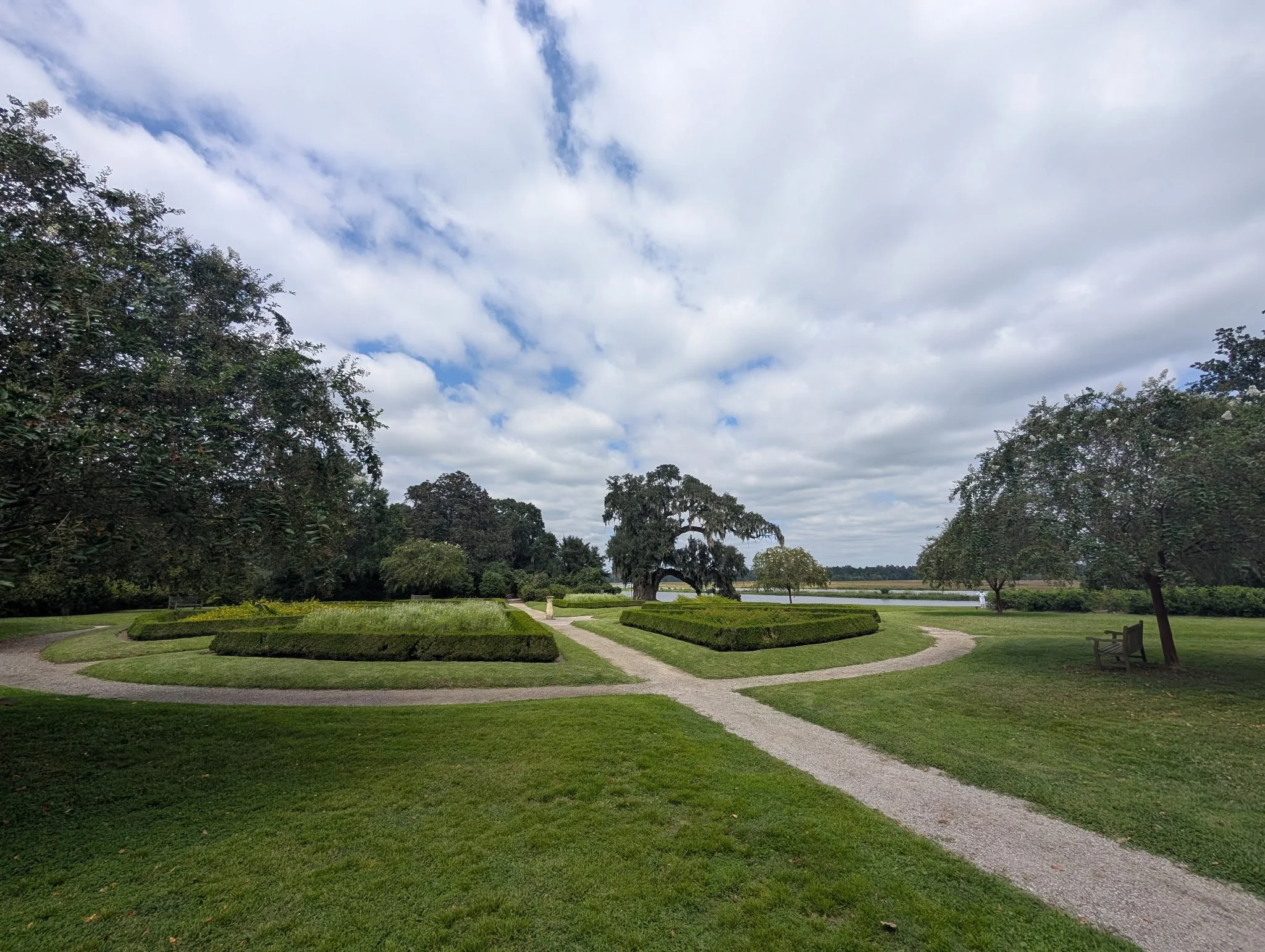
When you walk onto the grounds of Middleton Place, one of Charleston’s grand plantations, it may feel like you have walked into the pages of Margaret Mitchell’s novel Gone with the Wind. Being on a Civil War–era plantation invites you to experience the American South before, during, and after the Civil War. Because Middleton Place was home to people on each side of slavery, it allows sojourners to explore lessons found at the intersection of the two: the privileged as well as the enslaved.
Plantations, Power, People

Middleton Place tells a rich story from the past. The wealth of the storied Middleton family was measured in plantations, power, and people — shackled people.
At its peak, the Middleton fortune included “20 plantations . . . that [spanned] 50,000 acres.” The financial fortunes came with political power for successive generations of Middleton men, including one who served as a “president of the Continental Congress, [one as a] signer of the Declaration of Independence, [one as a] governor of South Carolina, [and one as a plenipotentiary] minister to Russia.”
The family was rich in profitable plantations and political positions of power, sure. But to place shackled people on their list of assets? Well, for most of us, that gets our moral tempers rising.
Humble Service
“We travel to places of historical importance to get a perspective on the past — to learn from those who have come before us”
As you learn about and contemplate the Middletons’ wealth, you may begin to perceive that, whether they knew it or not, their greatest treasure lay in the hearts of their enslaved property: a treasure that made these slaves loyal, hard workers — not because they were “owned” by a master who had earned their respect but because they had been ransomed by the Master who called them to serve in humility, by His grace.
Evidence for Christian faith among the enslaved comes from Horace Clarence Boyer, who noted that there were “a number of slaves who attended Episcopal services in the South, especially in South Carolina, where, prior to the Civil War, the bishop of that state claimed more African American communicants than White.”
These shackled slaves seemed to live out the message of Colossians 3:22–24 (NIV):
Slaves, obey your earthly masters in everything; and do it, not only when their eye is on you and to curry their favor, but with sincerity of heart and reverence for the Lord. Whatever you do, work at it with all your heart, as working for the Lord, not for human masters, since you know that you will receive an inheritance from the Lord as a reward. It is the Lord Christ you are serving. (italics added)
Whether they served as carpenters, coopers, cooks, gardeners, stable hands, or field workers, many slaves worked with all their heart, “as working for the Lord.”
What Words Reveal
Jesus said, “For out of the abundance of the heart the mouth speaks” (Matthew 12:34 ESV). While the enslaved hammered and planted and shoveled and labored, they also wrote and gave thanks and sang songs that revealed the true nature of their hearts.
Perhaps you’ve heard the song “Let Us Break Bread Together”:
Let us break bread together on our knees. Let us break bread together on our knees. When I fall on my knees with my face to the rising sun, Oh Lord, have mercy on me.
Dr. Carlton Young attributes this spiritual to the Gullah Geechee slave culture of Southeastern colonial America, including Charleston.
They sang as they worked with all their hearts, with their faces turned “to the rising sun.” In the midst of bondage, they worked for the Lord as they made bricks and maintained buildings, as they did laundry and mended clothes, as they cultivated rice and processed indigo.
An Eternal Inheritance
While a sojourn to Middleton Place leads us to an intersection of lessons from both slaves and slave owners, it also leads us to another intersection: one where both the past and the future converge.
Though now free from the atrocities of slavery, we stand in earshot of the wisdom of the enslaved who chose the path of working with all their hearts, as working for the Lord.
We also learn that external wealth is measured in the accumulation of property and position. More importantly, we learn that humble service, even under pressure, speaks of a greater wealth not of this world: an eternal inheritance measured in service to the true Master. And by placing our lives and our value in Him, just as these slaves did in the past, we can lead the future “with [our faces] to the rising sun” — with the Lord’s mercy upon us.
Want to learn the past so you can help lead the future?
Sojourn with us to discover the places, people, and principles that have shaped Western civilization!
Email us at info@leadwithsojourn.com.
1 “Middleton Place,” Sankofa’s Plantation Database, accessed March 23, 2026, https://sites.rootsweb.com/~afamerpl/plantations_usa/SC/middleton.html.
2 Modern Family: Middleton Style,” Charleston, accessed February 25, 2026, https://charlestonmag.com/features/modern_family_middleton_style.
3 Horace Clarence Boyer, quoted in Chris Fenner, “Let Us Break Bread Together on Our Knees,” Hymnology Archive, February 12, 2019, https://www.hymnologyarchive.com/let-us-break-bread-together.
4 C. Michael Hawn, “History of Hymns: ‘Let Us Break Bread Together,’” January 28, 2015, https://www.umcdiscipleship.org/resources/history-of-hymns-let-us-break-bread-together.
5 Hawn, “History of Hymns.”
6 Hawn, “History of Hymns.”