
Runnymede, England: The Birth of the Magna Carta

On a sloped field at Runnymede, just outside London in AD 1215, English landowners (“barons”) banded together to lay the greatest stepping stone in a millenium on the path to balancing governmental power with civil liberty. Their instrument for doing so is revered as the “Great Charter,” more commonly known as the Magna Carta.
To this day, the limitations the united barons placed on their king echo through the ages. Some of the Magna Carta’s protections would find new homes in America’s founding documents more than 500 years later: the Declaration of Independence, the US Constitution, and the Bill of Rights.
Learning a little about the Magna Carta can go a long way toward appreciating and preserving the blessings of liberty currently enjoyed by the United States and her allies.
A Royal Mess
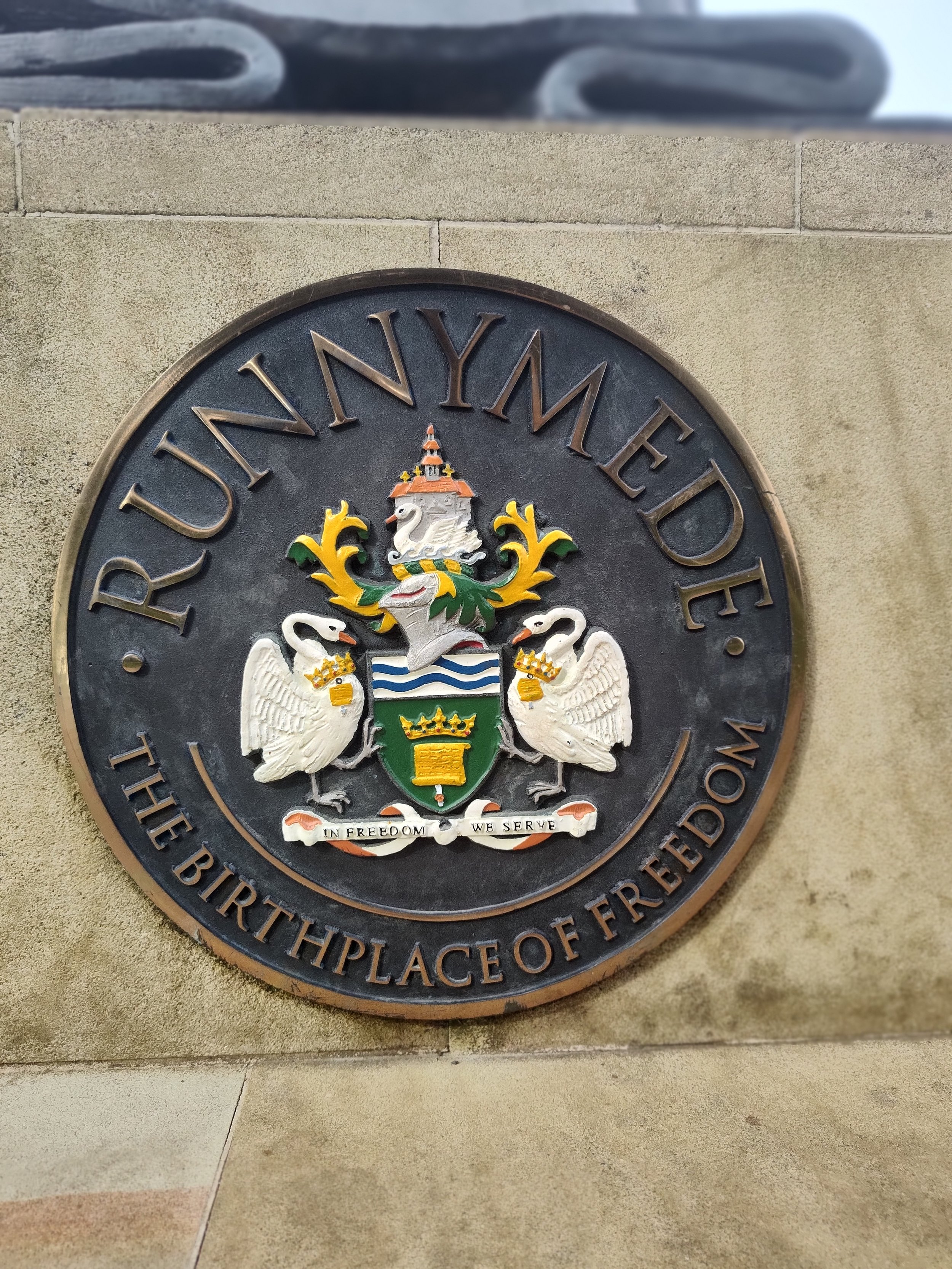
The Magna Carta traces its origin to the barons living under King John at Runnymede, Surrey, in Southern England.
The king was near the end of his unhappy life. His disputes had led to papal excommunication, his land seizure had alienated barons, his required fees in lieu of service had irritated knights, and his involvement in an unpopular and expensive war with France had turned much of England against him.
Eventually, the landowners’ patience with the crown’s unbridled exercise of power ran out. King John’s land seizures and conscription of soldiers motivated them to draw up the “Articles of the Barons,” the earliest version of the Magna Carta.1 In 1215, King John had no choice but to sign the document’s 63 chapters, designed to curb his power.
The Charter Matures
The following year, King John died, and his nine-year-old son, Henry III, was crowned. At age 10, this child king reissued the charter in 1216 with a reduced number of clauses. He was just a boy, the equivalent of a fourth grader. Henry’s final revision in 1225 became the Magna Carta that Western civilization knows today. This version influenced leaders in the American colonies almost 600 years later.
The Charter Endures
Though English law has evolved substantially since 1215, a few clauses from the Magna Carta resound through the ages, up to the present day: clauses 1, 39, and 40.
Clause 1 prohibits the federal government from impeding religious freedom: “We have first of all granted to God, and by this our present charter confirmed, for ourselves and our heirs in perpetuity, that the English Church is to be free, and to have its full rights and its liberties intact, and we wish this to be observed accordingly.”2
Clause 39 reads, “No free man is to be arrested, or imprisoned, or disseised, or outlawed, or exiled, or in any other way ruined, nor will we go against him or send against him, except by the lawful judgment of his peers or by the law of the land.”3
Clause 40 reads, “We will not sell, or deny, or delay right or justice to anyone.”4
These clauses are echoed in America’s founding documents — more specifically, clause 1 in the First Amendment and clauses 39 and 40 in the Fifth and Sixth Amendments of the Bill of Rights. These guarantee to citizens both due process and trial by a jury of their peers, rights that King George III had violated leading up to the Revolutionary War, according to grievances recorded in the Declaration of Independence.
In the centuries to follow, the Church of England would assert its independence from Rome, and the newly minted United States of America would assert the independence of its churches from government interference.
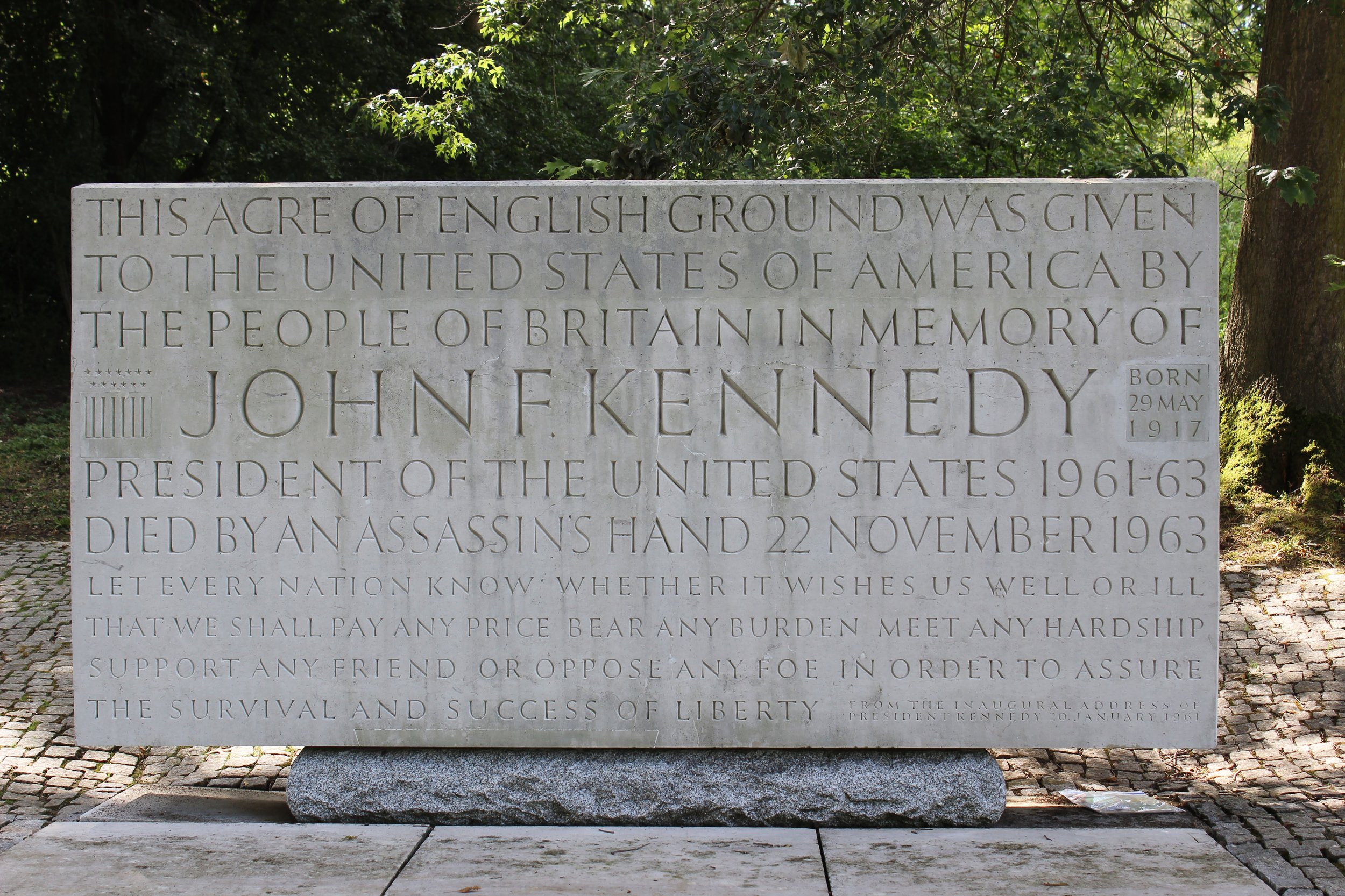
John F. Kennedy Memorial at Runnymede
The Magna Carta’s Legacy
“Freedom is never more than one generation away from extinction. It has to be fought for and defended by each generation.” —President Ronald Reagan
Ultimately, the limitation of the king’s power by his people through the Magna Carta asserted that no one is above the law. Although this assertion has continued to be much disputed by monarchs in the millenium after the Magna Carta was signed, it remains the contention of free people everywhere.
Thus, by learning about the Magna Carta at Runnymede, we prepare ourselves to lead in liberty, remembering, as President Ronald Reagan said, that “freedom is never more than one generation away from extinction. It has to be fought for and defended by each generation.”5
Want to learn the past so you can help lead the future?
Sojourn with us to discover the places, people, and principles that have shaped Western civilization!
Email us at info@leadwithsojourn.com.
1 “The Articles of the Barons,” The Magna Carta Project, accessed January 27, 2026, https://magnacarta.cmp.uea.ac.uk/read/articles_of_barons.
2 “Magna Carta 1215,” Clause 1, The Magna Carta Project, accessed January 27, 2026, https://magnacartaresearch.org/read/magna_carta_1215/Clause_01.
3 “Magna Carta 1215,” Clause 39, The Magna Carta Project, accessed January 27, 2026, https://magnacartaresearch.org/read/magna_carta_1215/Clause_39.
4 “Magna Carta 1215,” Clause 40, The Magna Carta Project, accessed January 27, 2026, https://magnacartaresearch.org/read/magna_carta_1215/Clause_40.
5 Ronald Reagan, “Remarks at the Annual Convention of Kiwanis International,” The Ronald Reagan Presidential Foundation & Institute, July 6, 1987, https://www.reaganfoundation.org/ronald-reagan/speeches/remarks-at-the-annual-convention-of-kiwanis-international.