
Welcome to Rainbow Row
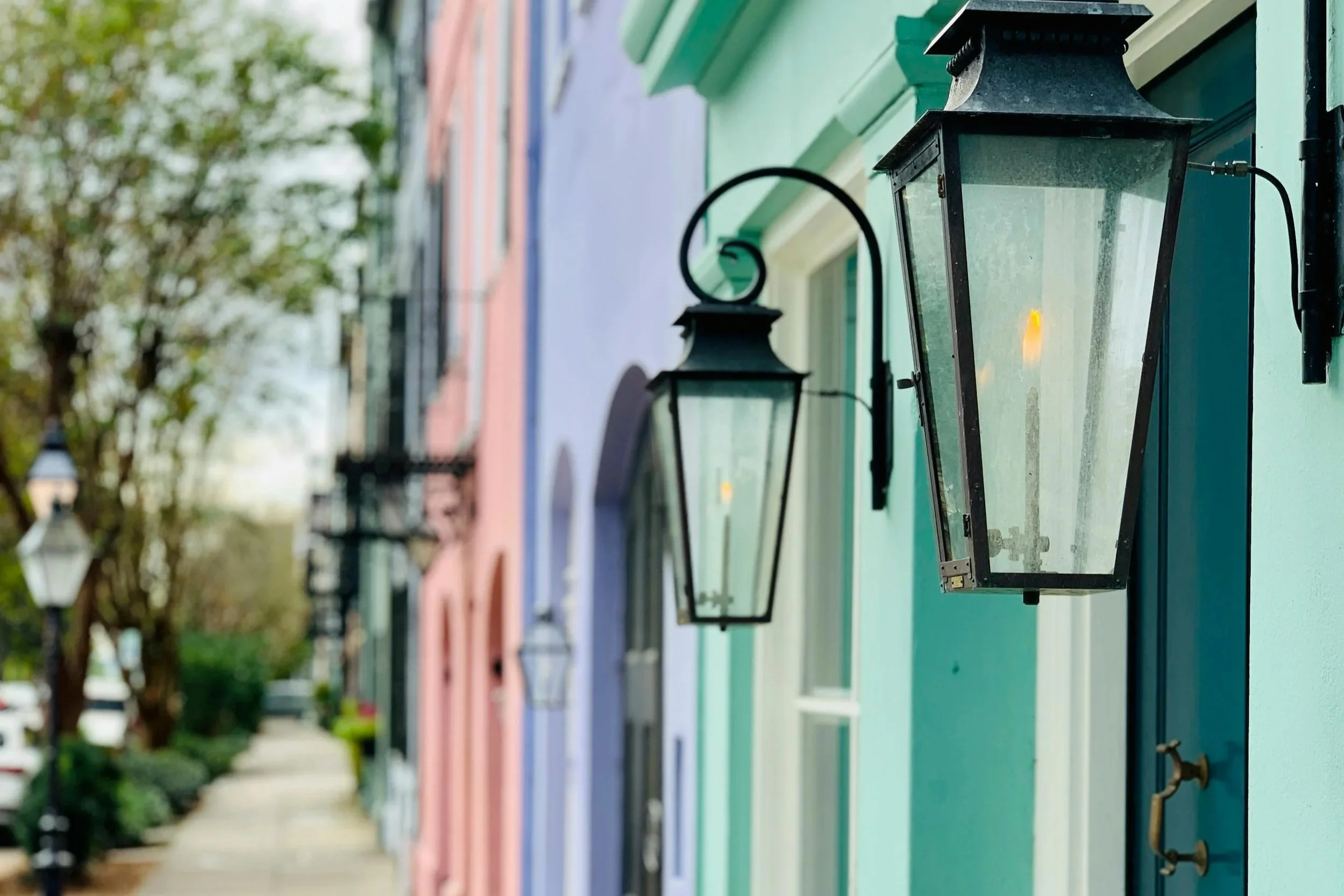
In a scenic and historic district of Charleston, South Carolina, stand 13 brightly painted row houses that represent some of the finest real estate in the area. This Charleston district is known as Rainbow Row.
Jewels of the Row
When a house comes up for sale on the west side of East Bay Street — numbers 70–107 to be specific — the listing might read something like this:
This charming [house] is situated in the heart of the historic walled city. . . . The home boasts plenty of natural light and picturesque views of the Charleston harbor. White Point Gardens, Waterfront Park, and the High Battery are just a short stroll away, as are numerous acclaimed restaurants. Inside, the recently renovated two-bedroom condo features lovely hardwood floors and generously sized rooms, including a dining area, living room, big kitchen, and welcoming shared foyer. It’s the perfect lock-and-leave abode for those seeking a delightful retreat in the heart of Charleston.1
This particular jewel in the Rainbow, described in the listing above, boasts two bedrooms and two baths and almost 1,100 square feet. It sold in 2025 for $905,000.
Real Estate Redemption
These Georgian-style houses date back to 1740. They used to be waterfront properties, perfect for merchants who had storefronts on the ground level and living quarters upstairs. “After the Civil War the area fell into disrepair and was not an area you would want to live in [as you would] today.”2 Truth be told, 100 years ago, this was slum livin’.
But thankfully, the district didn’t stay that way. Rainbow Row is a story of redemption — and every redemption story has a savior.
Enter Susan Pringle Frost. Frost was born to privilege, a woman “who could trace her Charleston roots back to the early years of the settlement.”3 She discovered a love for preserving historical buildings, became the first female realtor in Charleston, and, in 1920, founded the Preservation Society of Charleston. That same year, Frost purchased the property of 87 East Bay and renovated it. Twenty-one years later, she purchased another piece of the Rainbow: number 83.4
Frost’s initiative in rehabilitating dilapidated row houses led other investors to preserve the past as well. In 1931, “Dorothy Porcher Legge and her husband Judge Lionel Legge purchased the . . . houses on East Bay Street.”5 It was Dorothy’s idea “to paint the homes on this row a pretty shade of pastel pink, hoping to make the area look nicer. As time went on, other residents on the street began to paint their homes various pastel colors as well.”6 Dorothy Porcher Legge added the color in the redemption story of Rainbow Row.
Frost’s Personal Redemption
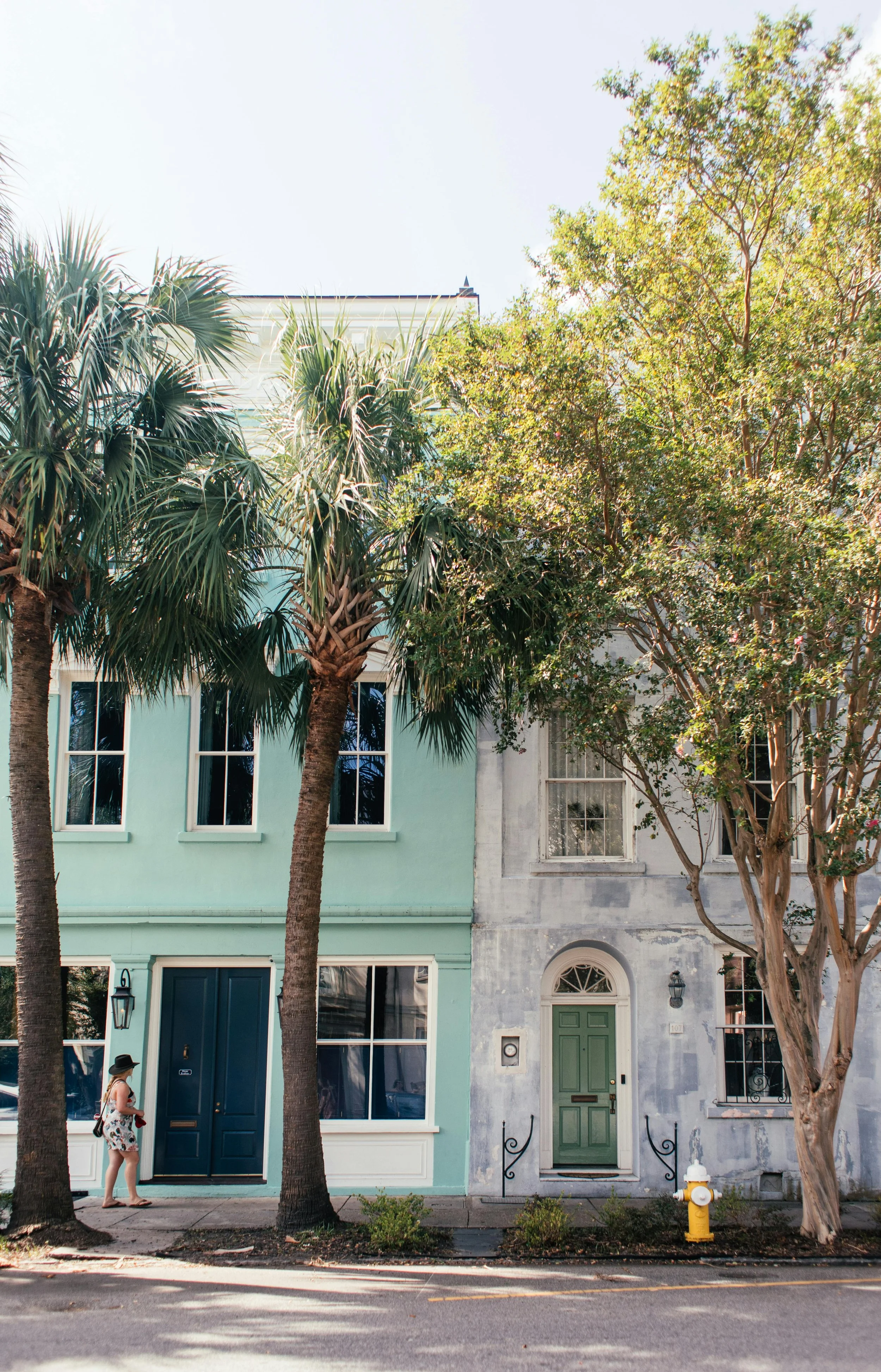
Another redemption story that echoes from Charleston’s East Bay Street is one born of flesh and blood, not siding and shingles. Susan Pringle Frost herself has a story of personal redemption.
Frost was born to “Dr. Francis LeJau Frost and Rebecca Brewton Pringle” in 1873. She was “destined to be a lady of leisure . . . [until] the decline of the Frost and Pringle rice plantations . . . and the failure of her father’s fertilizer business.”7 With a bleak financial future, Frost “learned basic stenographic skills and entered the workplace”8 as a secretary and later as a court stenographer. She developed a love for the women’s suffrage movement and for the preservation of historic structures.
Though destined for “leisure,” Frost never married but pursued her passions and made a way for herself—and for others—working for women’s rights and saving worthy buildings of the past from the wrecking ball.
Our Redemption
a reminder that buildings—as well as the people within them—have inherent value worthy of a second chance.
We sojourn to Charleston’s Rainbow Row not only to view its coveted real estate but to ponder its redemption story. Peering at the brightly colored row houses, we can imagine it: Thirteen houses that were destined for destruction were identified by an individual as worth redeeming. They were purchased for a price and rehabilitated by hard work, now standing as a reminder that buildings—as well as the people within them—have inherent value worthy of a second chance.
Worthy of redemption.
Want to learn the past so you can help lead the future?
Sojourn with us to discover the places, people, and principles that have shaped Western civilization!
Email us at info@leadwithsojourn.com.
1 John Condlin, “79 East Bay St,” Real, Accessed February 24, 2026, https://www.johncondlin.com/sold-listing/detail/1177674762/79-East-Bay-St-Charleston-SC.
2 “The History of Rainbow Row in Charleston,” Palmetto Carriage Works (blog), accessed February 19, 2026, https://palmettocarriage.com/the-history-of-rainbow-row/.
3 “Rainbow Row Part III—The Susan Pringle Frost Connection,” Diary of a Charleston Tour Guide, The Charleston Insider, February 19, 2018, https://charleston.com/charleston-insider/diary-of-a-charleston-tour-guide/rainbow-row-part-iii-the-susan-pringle-frost-connection.
4 The Charleston Insider, “Rainbow Row Part III.”
5 “The Captivating History of Rainbow Row,” Lowcountry Lifestyles, The Charleston Insider, September 28, 2017, https://charleston.com/charleston-insider/lowcountry-lifestyles/the-captivating-history-of-rainbow-row.
6 The Charleston Insider, “The Captivating History of Rainbow Row.”
7 South Carolina Encyclopedia, “Frost, Susan Pringle,” by Sidney R. Bland, last updated August 3, 2022, https://www.scencyclopedia.org/sce/entries/frost-susan-pringle/.
8 Bland, “Frost, Susan Pringle.”