
Parthenon
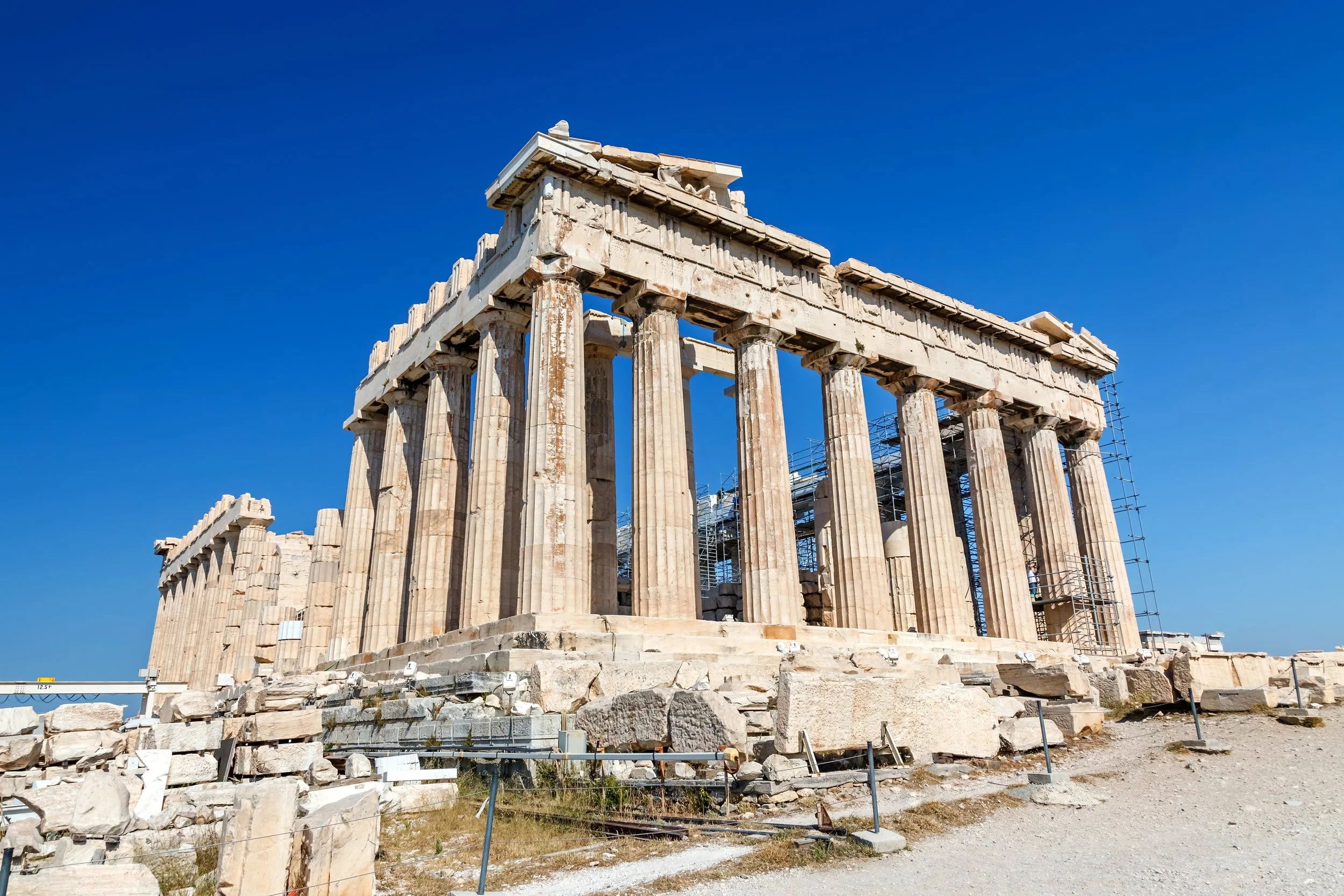
A sojourn to Athens is more than a trek to one of the world’s oldest cities. It is an invitation to explore the foundations of Western civilization.
Dating back five millennia, Athens’ “contributions to philosophy, politics, and the arts have left an indelible mark on history. The city was a hub of learning and discourse,”1 allowing thought leaders like Socrates, Plato, and Aristotle to teach the world how to learn, how to govern, and how to create—in essence, how to build a society that can stand the test of time.
The very engineering and architecture of this city show intentionality.
A visitor’s eyes are drawn to the citadel, a fortress that commands respect.2 By design, Greek cities placed their strongholds on an acropolis: “the upper fortified part of an ancient Greek city; a usually fortified height.”3 In Athens, the common noun acropolis became proper—the Acropolis, and it houses the Parthenon, “one of the most recognized buildings in the world and an enduring symbol of ancient Greece.”4
You’ll recognize this ancient temple. It was dedicated to the goddess Athena, the namesake of the city in which it stands. Her temple, complete with Doric columns, became an architectural inspiration for many buildings elsewhere. The Lincoln Memorial in Washington, DC, for example, was modeled after the Parthenon. You can see the similarities between the structures:
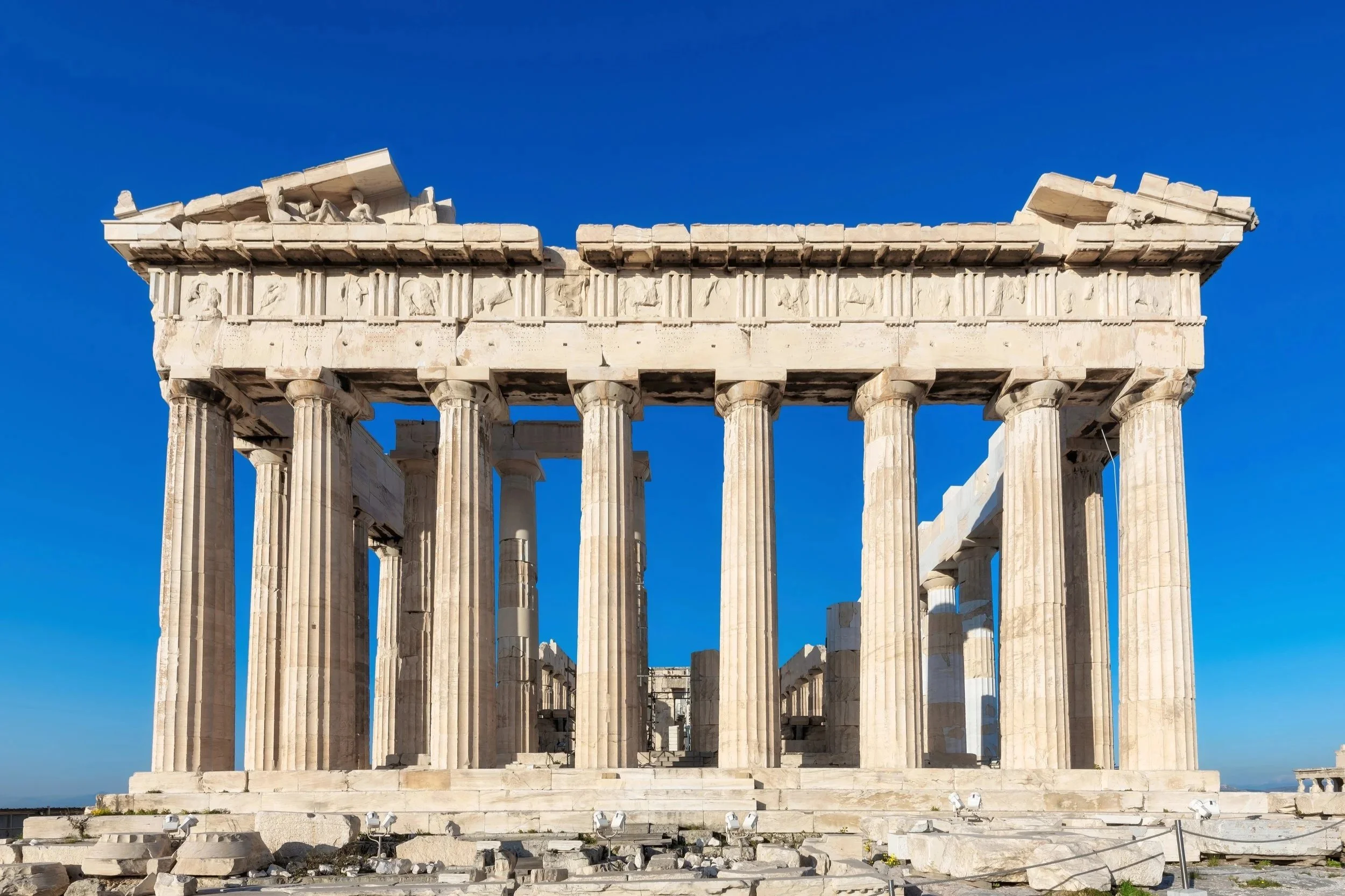
Parthenon in Athens, Greece

Lincoln Memorial in Washington, DC
Henry Bacon, architect of the Lincoln Memorial, intentionally reflected the Parthenon in the memorial structure because it’s a symbol of Athens, the birthplace of democracy.5 By doing so, he communicated—even through the colonnades—that what made Lincoln special was his value of democracy and pursuit of unity in the United States.
However, Bacon wasn’t the first one to reflect on how a building communicates value. It’s clear from the Parthenon’s intentional design that the Athenians believed this as well.
Divine Form and Function
Everything about the Parthenon echoes the intentional intersection of form and function.
Low steps on each side invite worshippers to ascend into the temple, which is supported by a 23,000-square-foot base. The 46 outer columns and 19 inner columns are slightly tapered to give the temple a symmetrical appearance. But they serve the function of supporting the frieze that “runs along the entire length of the walls of the Parthenon’s inner chamber.”6 The building tells the story of a procession to the Acropolis.
Everywhere you look, this 2,500-year-old temple seeks to tell stories of the philosophy of the ancient Greeks: their desire to approach learning by asking Socratic questions, their belief of appeasing deities through sacrifice, and their intent to flex their muscles by building citadels on an acropolis in order to repel foes.
St. Paul in Athens
Everywhere you look, this 2,500-year-old temple seeks to tell stories of the philosophy of the ancient Greeks.
Just a short walk down from the Parthenon lies Mars Hill, where Paul preached to the people of Athens (Acts 17:22–31). Paul argued that Jesus Christ was the “unknown God” long sought by the Athenians, and he was likely gesturing to the Parthenon as he did so. He used the Athenian altars and poets to make his argument that “we ought not to think that the divine being is like gold or silver or stone, an image formed by the art and imagination of man” but rather that He is the Lord of heaven and earth, Creator and Sustainer of the whole world.
Plunder the Parthenon
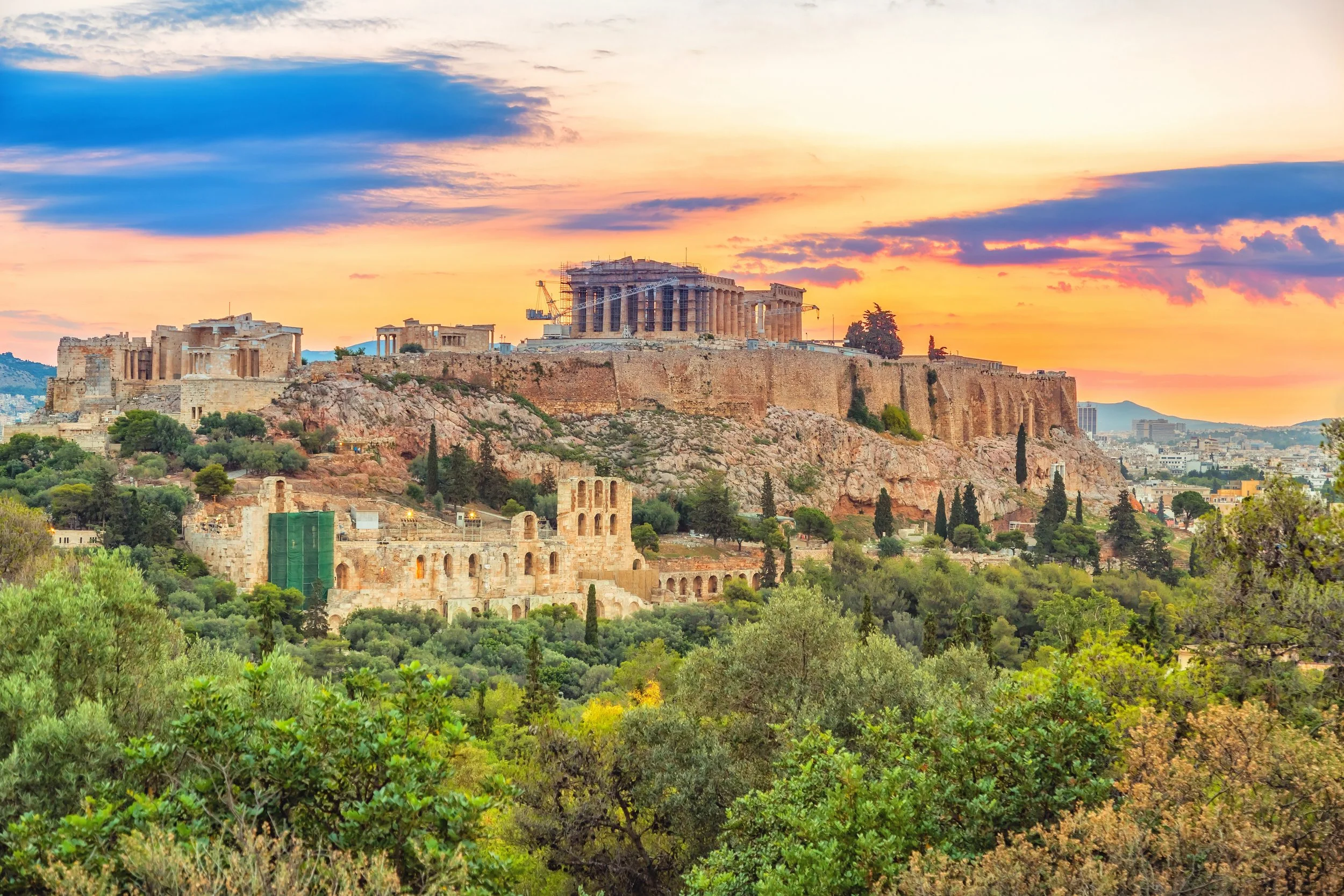
As sojourners, we ascend the stairs in the cradle of civilization to intentionally plunder the gold from the founders of Western thinking. That’s what leaders do well—they take the gold and leave the chaff behind. They pursue what “C.S. Lewis and many others of the greatest minds in the Western tradition . . . have argued [are the] ‘three transcendentals’”: the true, the good, and the beautiful, for they transcend all things.7
Thought leaders come to the Parthenon not to agree with all that the ancient Greeks believed but to learn from them. They come in the spirit of Francis Bacon, who wrote, “Read not to contradict and confute; nor to believe and take for granted; nor to find talk and discourse; but to weigh and consider.”8
In this ancient city, gold abounds in a triad of leadership principles: First, we learn by asking questions. Second, we govern by the people and for the people. And third, we create by the standards of the true, the good, and the beautiful.
Want to learn the past so you can help lead the future?
Sojourn with us to discover the places, people, and principles that have shaped Western civilization!
Email us at info@leadwithsojourn.com.
1 “Athens in the Bible: Historical and Cultural Contexts,” Divine Narratives, December 3, 2024, https://divinenarratives.org/athens-in-the-bible-historical-and-cultural-contexts/.
2 Merriam-Webster Dictionary, “citadel,” accessed November 19, 2025, https://www.merriam-webster.com/dictionary/citadel?src=search-dict-hed.
3 Merriam-Webster Dictionary, “acropolis,” accessed November 19, 2025, https://www.merriam-webster.com/dictionary/acropolis?src=search-dict-hed.
4 “Parthenon,” History.com, last updated May 28, 2025, https://www.history.com/articles/parthenon.
5 “Lincoln Memorial Builders,” Lincoln Memorial, National Park Service, last updated November 18, 2021, https://www.nps.gov/linc/learn/historyculture/lincoln-memorial-design-individuals.htm.
6 History.com, “The Parthenon.”
7 Adam De Gree, “C.S. Lewis on the True, the Good, and the Beautiful,” Intellectual Takeout, August 15, 2024, https://intellectualtakeout.org/2024/08/c-s-lewis-true-good-beautiful/.
8 Francis Bacon, “Of Studies,” English Literature, accessed November 19, 2025, https://englishliterature.net/francis-bacon/of-studies.