
The Ruins of Ephesus
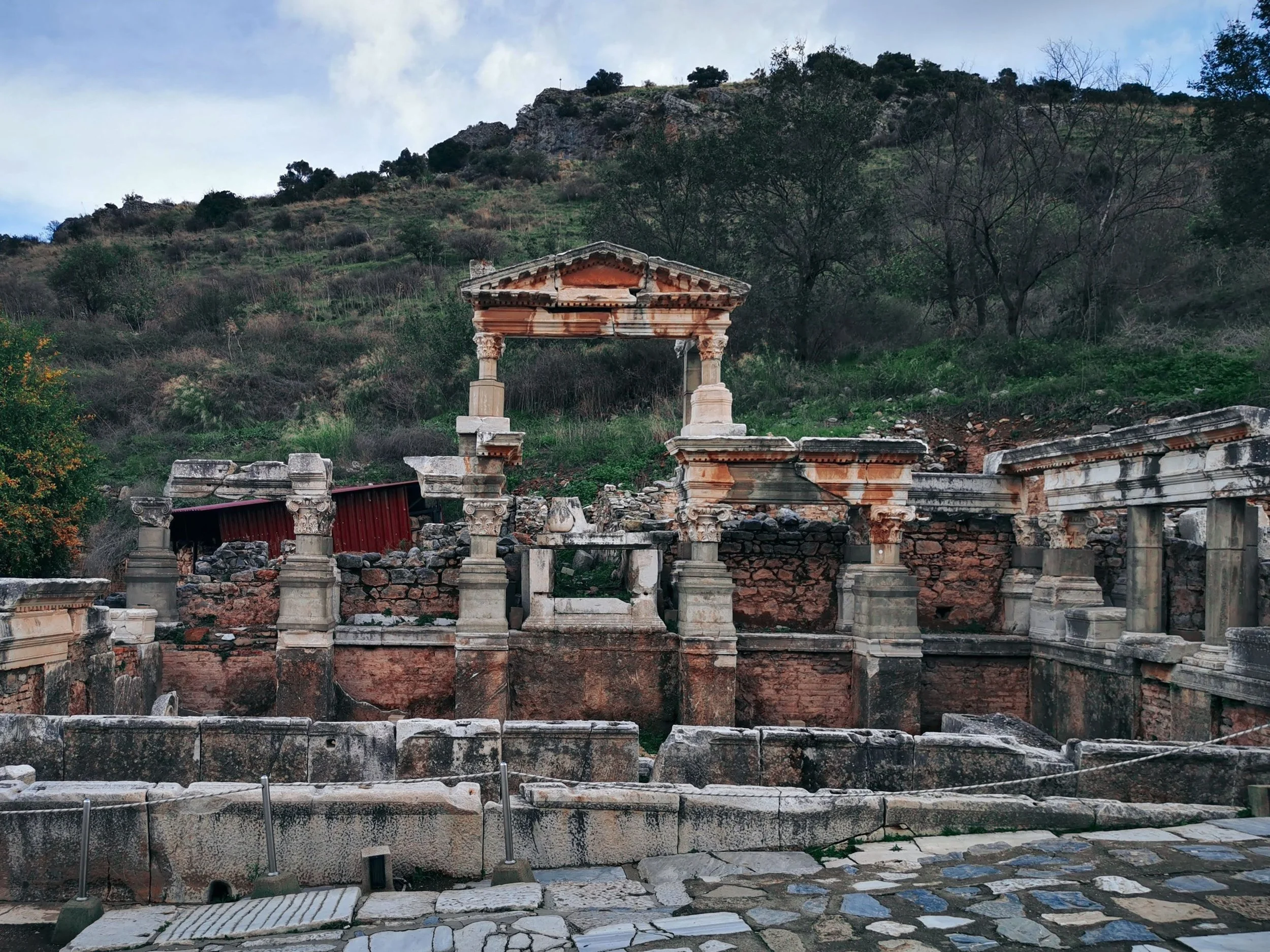
Sojourning to the ancient ruins of Ephesus may make you fall in love with a culture that stretches back 1,100 years before Christ.
Within this ancient city, you’ll marvel at the beauty of “fountains, statues, monuments, temples, a great library, residences, the agora, and the theater.”1 You’ll admire a population that grew to 250,000 — “the third or fourth largest city in the Roman Empire.”2 You’ll dream about what it sounded like, looked like, and smelled like when 25,000 people filled the Ephesian amphitheater, “the largest in the ancient world, . . . used initially for drama and later for gladiatorial combats.”3 You’ll gaze at the remains of “the Library of Celsus, [which] measured roughly [2,000 square feet] and . . . contained as many as 12,000 scrolls.”4 Ephesus “proudly boasted that it was the first and greatest metropolis of Asia.”5
And though you will disagree with what they worshipped, you’ll look with wonder at the remnants of the Artemision, a columned temple to the Greek goddess Artemis.6 Indeed, “few archaeological sites . . . are as impressive as Ephesus. The excavated and reconstructed buildings bear eloquent testimony of this important and grand city of ancient Asia Minor.”7
Yes — with so much to see, it’s easy to fall in love with this important site of antiquity.
Ephesus: A Growing Church
“For followers of Christ, a sojourn to ancient Ephesus will allow you to walk in the footsteps of Paul. His love for the Ephesians may stir modern Christians to love this first century church too.”
For followers of Christ, a sojourn to ancient Ephesus will allow you to walk in the footsteps of Paul. His love for the Ephesians may stir modern Christians to love this first-century church too.
Paul “visited [Ephesus] . . . on both his second and third missionary journeys.”8 On his second trip, he left Priscilla and Aquila, who established a house church.9 They met Apollos of Alexandria in the synagogue, “a learned man, with a thorough knowledge of the Scriptures,”10 and “invited him to their home and explained to him the way of God more adequately.”11 Apollos joined them in the effort of “proving from the Scriptures that Jesus was the Messiah.”12
The Famous Riot
During Paul’s third missionary journey, he “spent two years teaching and preaching in the hall of Tyrannus.”13 Paul’s commitment to the Ephesians spans three years of living among them.
While there, he boldly engaged the culture of idolatry. On one occasion, Paul “aroused the anger of the city’s guild of silversmiths, who had a prosperous business selling silver shrines of Artemis.”14 A riot ensued when Demetrius, a silversmith, told the other tradesmen, “Paul has convinced and led astray large numbers of people here in Ephesus and in practically the whole province of Asia. He says that gods made by human hands are no gods at all.”15 Despite the prevalent opposition, the Ephesian believers remained faithful.
John’s Revelation
The Ephesian believers received considerable mention in the book of Acts. But of the many churches Paul visited on his journeys, “Ephesus is the only one . . . addressed in the book of Revelation.”16 Read what the apostle John relays from God to the Ephesians in Revelation 2:1–5:
To the angel of the church in Ephesus write: . . . “I know your works, your toil and your patient endurance, and how you cannot bear with those who are evil, but have tested those who call themselves apostles and are not, and found them to be false. I know you are enduring patiently and bearing up for my name’s sake, and you have not grown weary. But I have this against you, that you have abandoned the love you had at first. Remember therefore from where you have fallen; repent, and do the works you did at first.”
Standing at this ancient ruin, you perceive what the Ephesian Christians were up against. The enormity of the theater, the size of the temple to Artemis, and the centuries of worshipping gods made by the hands of men echo through God’s words: “I know your works, your toil and your patient endurance, and how you cannot bear with those who are evil.”17
Somewhere along the way, however, the sparkle in their eyes had faded. Perhaps without even noticing, the Ephesian believers had “abandoned the love [they] had at first.”18 Through his revelation from the Lord, John urged these believers to look to their past to reignite their first love.
Loving for the Long Haul
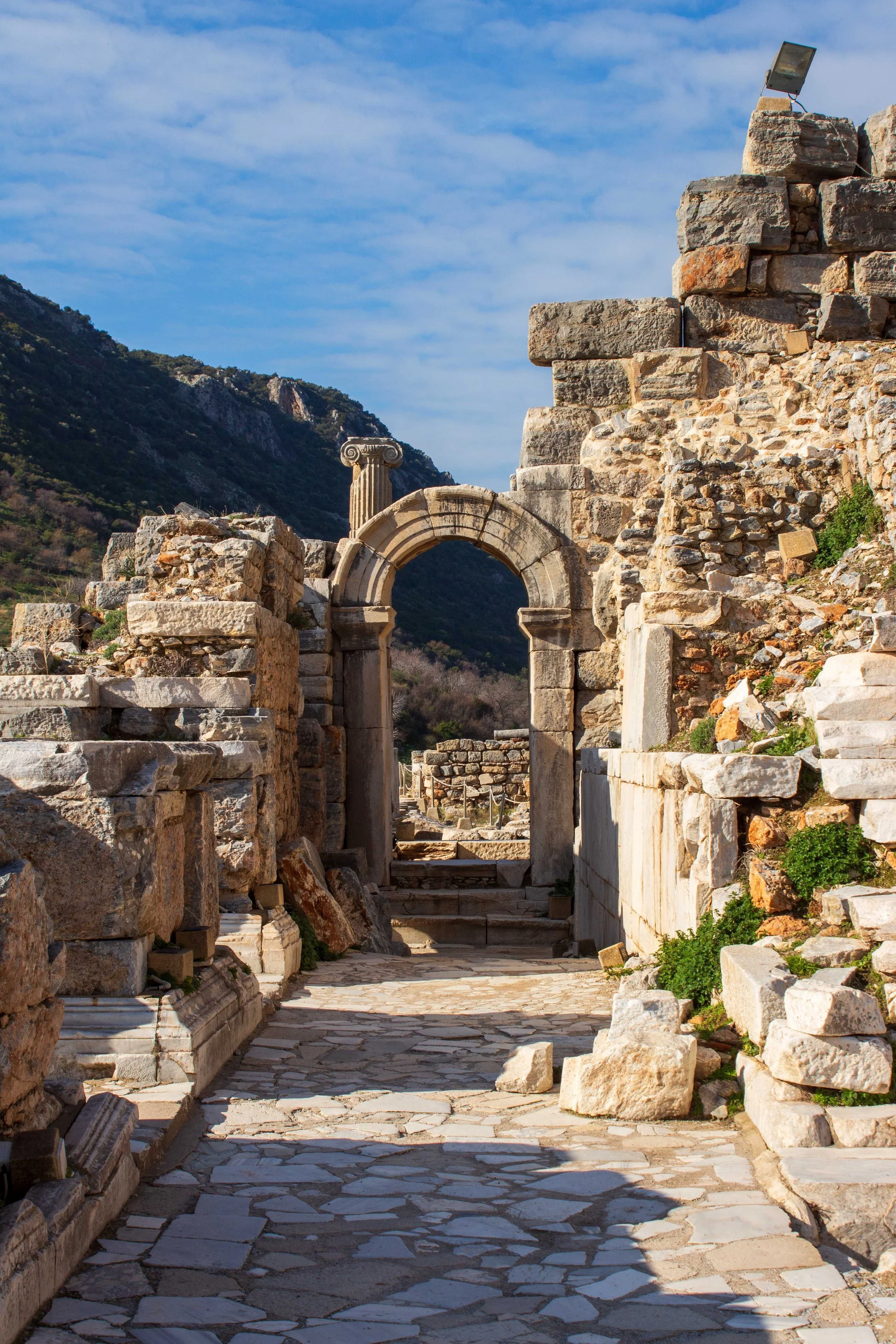
Exploring Ephesus may make you fall in love with its rich history, its beauty and antiquity, and the story of the Ephesian Christians. The temptation to allow that love to fade may happen to you when you head to the next ancient ruin. Within days of falling in love with Ephesus, you too may lose your first love.
Take heart by learning a lesson from Ephesus’s past. Directly after John identified the Ephesians’ problem, he revealed the solution: “Remember therefore from where you have fallen; repent, and do the works you did at first.”19
Our love for the Lord and His work is fanned into flame by lessons from the past. And these lessons emerge not only from Ephesus but from other stories and cities that came long before us — and whose lessons continue to lead well ahead of us.
Want to learn the past so you can help lead the future?
Sojourn with us to discover the places, people, and principles that have shaped Western civilization!
Email us at info@leadwithsojourn.com.
1 Clyde E. Fant and Mitchell G. Reddish, A Guide to Biblical Sites in Greece and Turkey (Oxford University Press, 2003), 177
2 Fant and Reddish, A Guide to Biblical Sites, 179.
3 “Ruins of Ephesus, Turkey,” Odyssey Traveller, December 14, 2020, https://www.odysseytraveller.com/articles/ruins-of-ephesus/.
4 Odyssey Traveller, “Ruins of Ephesus, Turkey.”
5 Fant and Reddish, A Guide to Biblical Sites, 179.
6 Fant and Reddish, A Guide to Biblical Sites, 178.
7 Fant and Reddish, A Guide to Biblical Sites, 177.
8 Fant and Reddish, A Guide to Biblical Sites, 180.
9 1 Corinthians 16:19.
10 Acts 18:24 (NIV).
11 Acts 18:26 (NIV).
12 Acts 18:28 (NIV).
13 Fant and Reddish, A Guide to Biblical Sites, 180.
14 Fant and Reddish, A Guide to Biblical Sites, 181.
15 Acts 19:26 (NIV).
16 Fant and Reddish, A Guide to Biblical Sites, 180.
17 Revelation 2:2.
18 Revelation 2:4.
19 Revelation 2:5.