
Granary Burying Ground: Heroes at Rest
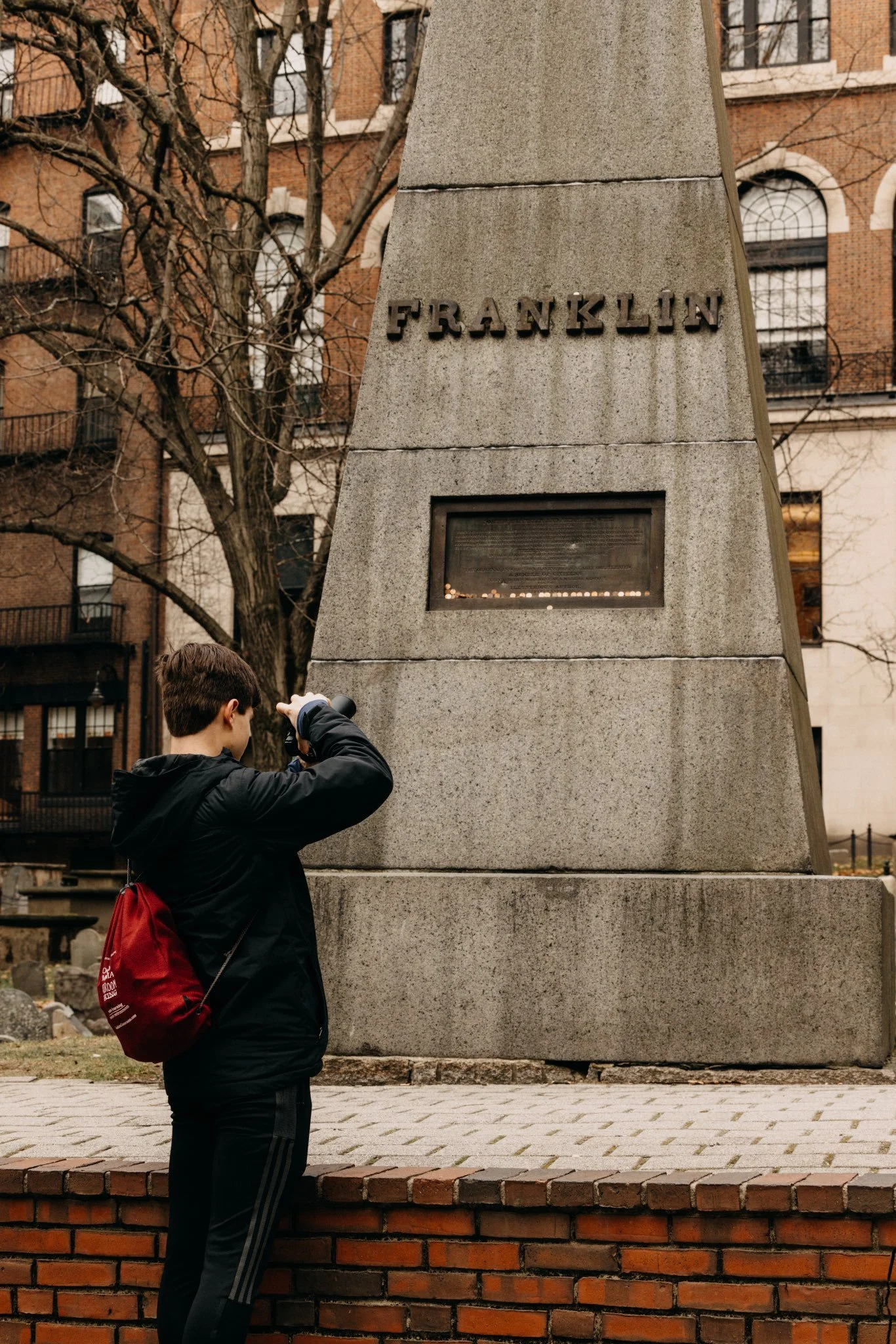
Located in the heart of Boston, next to Park Street Church, lies a rich opportunity not to be missed: a visit to the city’s Granary Burying Ground. Part of Boston’s historic Freedom Trail, Granary is a two-acre cemetery containing “the remains of more famous people than any other small graveyard in America”1 and houses the city’s tightest grouping of memorials dedicated to American patriots. Among these patriots are three signers of the Declaration of Independence, the victims of the Boston Massacre, Paul Revere, John Hancock, Samuel Adams, and Peter Faneuil.
The Cause: Liberty
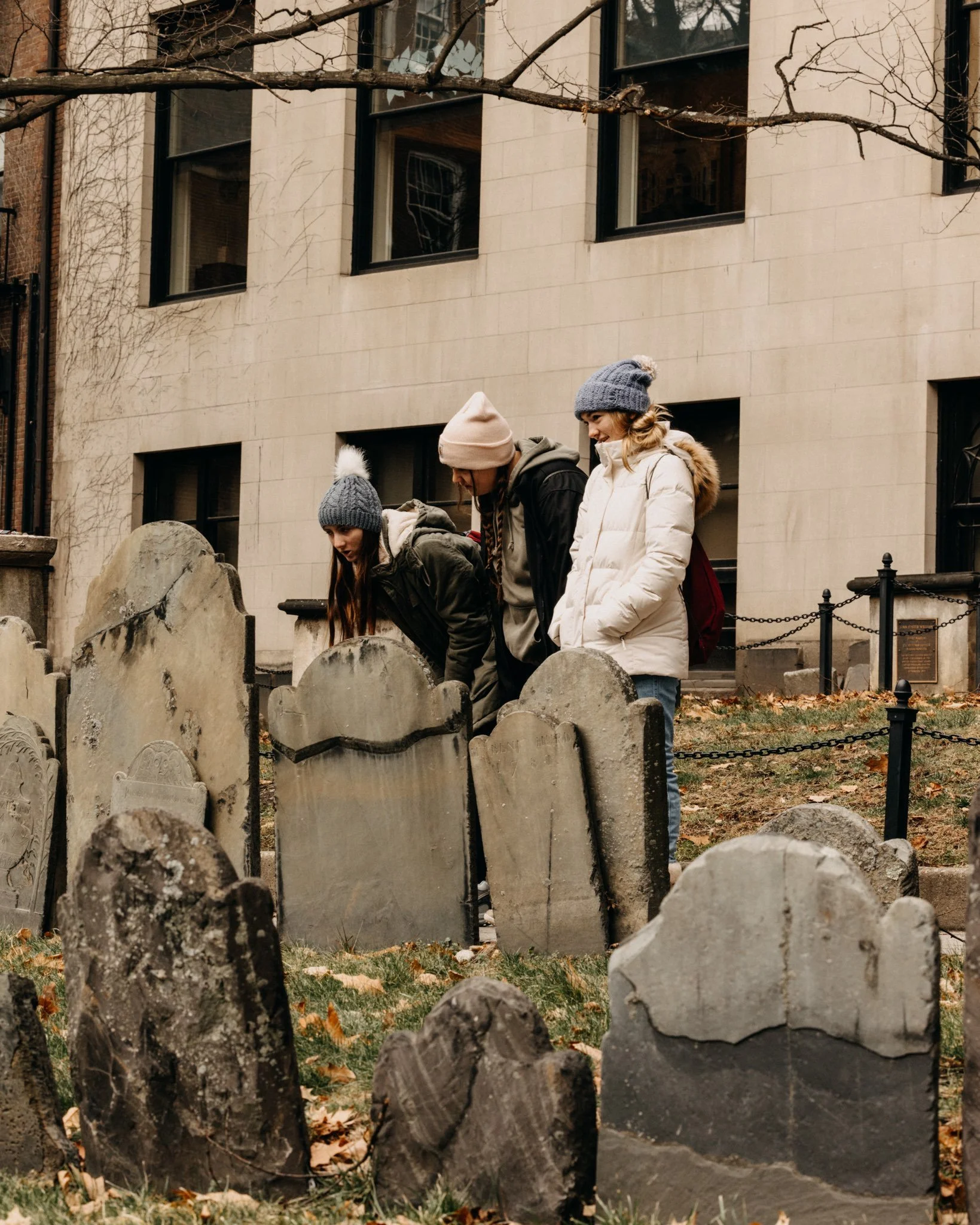
Do you recognize the names of these patriots and remember what they’re known for? Paul Revere made his living working with silver and copper — but he’s better known for his famous “midnight ride.” John Hancock used his wealth to train and equip the Minutemen (members of the civilian militia) to respond to a conflict at a minute’s notice and used his influence to speak out against unfair taxation. Samuel Adams’s inspiration of the Sons of Liberty led him to be known as “the organizer of the Revolution.” Some say that “it was Hancock’s money and Adams’s brains that fueled the revolt” against England.2
The colonial patriots buried at this cemetery were united by a conviction well known to many Americans: “We hold these truths to be self-evident, that all men are created equal, that they are endowed by their Creator with certain unalienable Rights, that among these are Life, Liberty and the pursuit of Happiness.”3
Because Samuel Adams believed so strongly in the cause of personal liberty, he became a thorn in the side of the British through his written rhetoric in the fight for freedom. He fought against taxation without representation, urged merchants to boycott British products, and fanned the flames of resistance.
His ability to persuade others to fight for the cause of liberty led to our nation’s independence and earned him a resting place of honor at the Granary Burying Ground.
Granary’s Early Martyrs
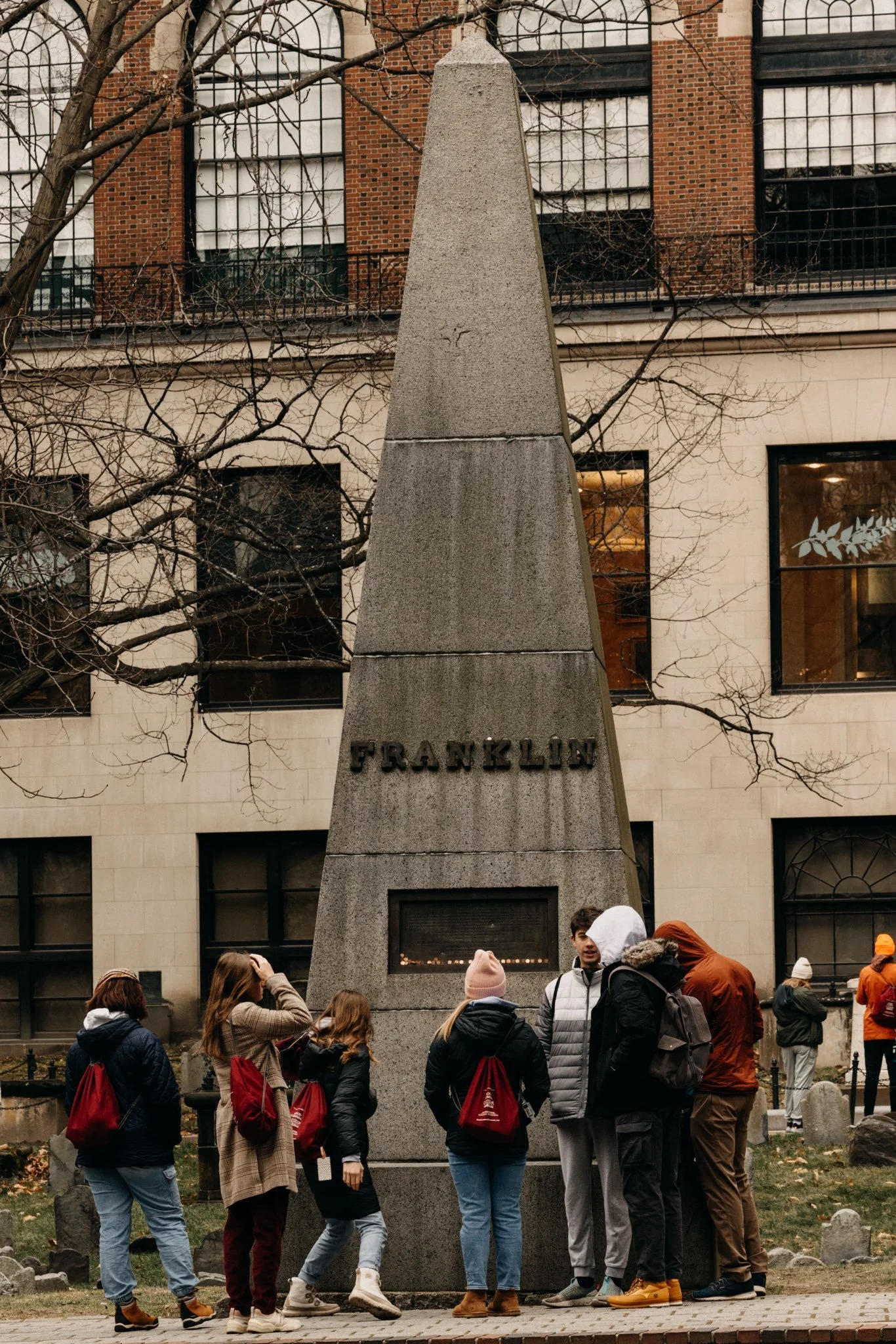
Others buried at Granary are less well known but no less important. Among them are Samuel Gray, Samuel Maverick, James Caldwell, Crispus Attucks, and Patrick Carr. These patriots earned burial at Granary on a day when tempers grew hot, Redcoats felt threatened, and five British citizens were shot by British soldiers. They are the victims of the Boston Massacre.
Just beyond their graves lies Christopher Seider — the first martyr of the American Revolution. This 11-year-old boy was standing in a crowd of protestors when Ebenezer Richardson, a British customs officer, fired into the crowd. Two thousand people attended the boy’s funeral.4
Days later, another large crowd formed for the funeral of the victims of the Boston Massacre. This service was organized by Samuel Adams.5
The Cradle of Liberty
Granary Burying Ground also houses the remains of a famous patriot who didn’t make a midnight ride or distribute revolutionary writings or lose his life violently. This patriot was Peter Faneuil, one of Boston’s wealthiest merchants who gifted the cause with a building that bears his name. Faneuil Hall, which served as a meeting place during the Revolution, “kindled that divine spark of liberty, which, like an unconquerable flame, has pervaded the continent.”6
From Faneuil Hall, Samuel Adams ignited the notion that the colonies should unite. Faneuil Hall saw the fanning of revolutionary flames in 1764, with debate of the Sugar Act and “the doctrine of ‘no taxation without representation.’”7
Because of this, it’s no wonder that Faneuil Hall bears the nickname the “Cradle of Liberty.”8
Learning to Lead
A sojourn to old Boston cemeteries calls on travelers to learn from the past. We see that leaders come from a variety of vocations: silversmiths willing to carry important messages through dark nights, investors who are better at balancing budget sheets than muskets, firebrands who can gather and convince a crowd, and ordinary citizens who commit to a cause worth dying for.
We learn to believe in the most important things from a broad range of people. Then we look in the mirror and ask, “How does my time, my treasure, and my talent equip me to champion the cause of life, liberty, and the pursuit of happiness?”
This opportunity to reflect on the past — with our eyes in the present — equips us to lead the future with knowledge, wisdom, and confidence, remembering those who gave their lives so we might be free to do so.
Want to learn the past so you can help lead the future?
Sojourn with us to discover the places, people, and principles that have shaped Western civilization!
Email us at info@leadwithsojourn.com.
1 Charles Bahne, The Complete Guide to Boston’s Freedom Trail, 4th ed. (Newtowne Publishing, 2013), 45.
2 Bayne, Boston's Freedom Trail, 16.
3 “Declaration of Independence: A Transcription,” National Archives, July 4, 1776, https://www.archives.gov/founding-docs/declaration.
4 “The Remains of Young Seider, the Unfortunate Boy Who Was Barbarously Murdered the 22nd of February Last . . .,” Massachusetts Historical Society, accessed February 11, 2026, https://www.masshist.org/database/viewer.php?item_id=318&pid=2.
5 “Samuel Adams,” National Constitution Center, accessed February 11, 2026, https://constitutioncenter.org/signers/samuel-adams.
6 Bayne, Boston's Freedom Trail, 32.
7 Bayne, Boston's Freedom Trail, 34.
8 Bayne, Boston's Freedom Trail, 32.